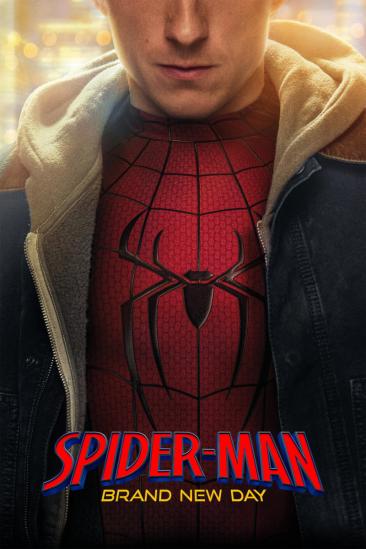
Fighting crime full-time as Spider-Man in a world that doesn't remember him—and the pressure of seeing his old friends move on without him—sparks a change in Peter Parker he may not have the po...
Every time I try to get away from the MCU, they pull out another hat trick on the fly, and I gotta drag my ass back to the theater. Thankfully, I didn’t mind as much because the next film released in Phase 6 is “Spider-Man: Brand New Day”….and my relationship with the MCU Spidey films has always been complicated. I respect Homecoming as a modest, unpretentious, simple back-to-basics re-introduction to the character, I learned to dislike Far From Home upon multiple rewatches, and while the emotional storytelling for No Way Home was great, the constant MCU-isms kept getting in the way; it might’ve been nostalgia bait with a purpose…..but it was still nostalgia bait. So when Brand New Day was announced, I was cautious—but, for the first time in a while, something in me actually wanted to be wrong. I wanted to believe again.
And for a good while….I did. It probably is the best of the MCU Spidey series by a pretty vast margin…..and it’s still only just good.
This is the first MCU Spidey film to not be directed by Jon Watts, following the conclusion of the original trilogy. Destin Daniel Cretton from Shang-Chi and Wonder Man takes over here, and my god, what a difference it makes. Infused with a dramatic sensibility that automatically shifts everything in its direct vicinity and with more than enough heart to sell it than how Watts was able to, there’s actual hunger, friction and reach to where Destin grounds both the dramatic and emotional beats despite needing to contend with the narrative’s own contentions. Even when the film inevitably hedges, even when it stops short of the full transformation or rebirth it kept gesturing toward, his direction is still operating at a wider enough frequency to where its baby steps still technically exceed beyond the bare minimum we were originally getting.
Prioritizing on‑set locations and practical stunt work, Charles Wood’s production design helps instill a sense of place that feels modernly retro—lived-in and tactile in a way the trilogy never quite managed—and for the first time in this series, New York actually is bustling with personality, fervor and enough substance to where it feels just as big and expansive as Spider-Man’s ever-growing reach/need to protect it. Downside is old and new tidbits of worldbuilding don’t always gel the way it tricks us into thinking it does; the seams show. It diffuses some of the story’s small scale, the whole thing occasionally going so aesthetically wide that it loses definition at its edges—but the scope itself, to its credit, never suffer the same pushback.
If you consider the first three MCU Spider-Man movies as this stubborn trudge through early adolescence in movie form—always angling for approval, always trying to prove something—this film’s presentation is entirely adult. It plunders the Raimi films gothic, almost Catholic sense of tragedy, borrows the Webb films’ raw nerve of bruised romanticism, and takes the Insomniac games’ proprioceptive charge and kinetic/tactile sense of movement and synthesizes all of it. Of all its influences, it is the Insomniac games that leave the deepest fingerprints, and that especially carries over to the camerawork. Brett Pawlak’s cinematography gives off this classic 2000s comic‑book movie flair throughout without ever fully committing to that aesthetic in a way that would date it. Many of the shots and framework emulate this comic book feeling without needing to fully lean into that style, strong lighting cues and deliberate camera angles that evoke a semi-potent horror‑tinged undercurrent to the surface and in the end, it only just earns the sandbox it’s playing in.
Nat Sanders, Gina Sansom, and Harry Yoon splitting editorial duties is the kind of credit block that usually sets off some alarm bells, but they manage to stay in service of Pawlak’s work rather than cutting against it. The sporadic momentum never quite derails what Pawlak is doing visually, and the two stay in lockstep more often than not.
With much of the film being done practically, the visual effects and CGI aren’t that noticeable in comparison to the trilogy but whatever is there holds up fairly well, it pulls just enough focus together so that the overstuffed elements feels like it has a point to it, and similar to Shang-Chi, the action sequences carry a weightless energy to them….but they’re a lot of fun; easily the most memorable of the series with some splendid choreography inspired by or lifted directly from the fluid combat of the Insomniac games. At the same time though, they never explode the same way they did in Shang-Chi and each set piece resolves a little too neatly, a little too soon.
Tonally speaking, it’s such a welcome change of pace from before. More somber and retrospective while toning down just enough of the fluff for it to not feel congested and muddled, it allows us to actually sit with the discomfort with a measured patience rather than scrambling to undercut every moment of genuine weight with an ill-timed quip.
Michael Giacchino is back, and the score is quietly one of the film’s better elements—though “quietly” is the operative word, because it sits further back in the mix than it did across the previous trilogy. The Brand New Day Suite is the clear standout, and the rest holds up, even if none of it particularly grabbed me. But that restraint is the point: he’s deliberately hollowed the theme out, pulling notes and reworking the timbre to mirror the hollowed-out version of Peter we’re watching onscreen. Sound design remains exactly as good as it needs to be and then some, Sanja Milkovic Hays can get a little cheeky with the color coordination in her costume design but is otherwise very comic-accurate, and the film pushes the PG-13 rating as far as it can manage for a movie in this particular franchise.
I genuinely don’t have many complaints about this cast. Every single one of them is locked in from the jump—fully committed, fully present, and none of them are phoning it in or visibly straining under the weight of the material. Dialogue is above average, and there is a genuine warmth extended to most of the characters here, screen time be damned. That said, it isn’t a clean sweep—some of them come out the other side a little roughed up by the writing, and a few choices don’t quite hold water. Peter and MJ get the full bulk of the character work while everyone else is essentially orbiting them; it’s like most of them are only here to get drafted into service of Peter’s story and ONLY Peter’s story rather than using that to build and expand on the arc’s they were already given here or in previous MCU projects. They’re present, they’re functional, and they’re not wallpaper— but the ceiling is still kinda low.
This is easily the best Tom Holland has been in these movies, hook, line and sinker. Naturally translating Peter’s gradual mania, vulnerability, and his charms so effortlessly, you do feel like he’s grown up with and through the character as much as the audience has, and the natural chemistry he exudes with everyone else feels spotless, especially with Zendaya. Both Zendaya and Jon Bernthal carry that emotional poignancy in spades, and while it takes a while for Sadie Sink to really dig into the meat and potatoes of her character, once she locks the fuck in, she is sensational. Again, everybody in this cast is great.
Yet another small-scale adventure masquerading as an attempt at a beautiful mature character study, this narrative had much more going for it than the previous three MCU Spidey films……if only by the law of averages. Both on paper and execution, it reeks of promise; one part detective story, one part psychological thriller, one part buddy comedy, and one part therapy session all under the guise of a classic Spider-Man annual glueing it all together and for the most part, it does hold. Picking up very nicely from where No Way Home left off, I applaud the attempt at elevating itself with a more mature tone while keeping its heart on its sleeve; it’s a prototypical archetypal superhero movie in the summer blockbuster mold, catering to crowds hungry for big-screen spectacles, popcorn, and escapism, and it knows that. There are echos of a sound architecture in this narrative that keeps reaching for profundity, feinting at the operatic before settling its own odd microclimate of tender, shambolic ambitions and despite technically being a hodgepodge of three separate movies—and let's be real, these modes don’t so much merge as they coexist, jostling alongside the other so they don’t snap out of place—that reality doesn’t really hit you until the third act, where you start sensing the little awkward patchwork showing through the seams. Honestly, the bigger sin would’ve been if any of it was boring; thank god, it isn’t.
Essentially, it’s another MCU movie that tries to have its cake and eat it too…..but its nowhere near as perpetually at tension with itself as its predecessors were; this is, by extension, the most confident these movies have been, and it works well enough on its own merits to brush aside the usual stink of franchise fatigue for a few hours.
Thematically, this story hits right at home with traditional Spider-Man lore: taking the oldest of Peter Parker’s burdens and unfolding it into something expansive enough to make the well-worn tropes feel spacious again, almost oceanic in their melancholy and possibility….and with a very high emphasis on community, second chances, the cost of isolation, the weight of responsibilities we must abide by? None of it is new, but they’re very resonant throughout. This is a Peter Parker who was forced to make the hardest choice imaginable at the end of No Way Home after already losing everything, and he is now firmly in depressed autopilot, surviving instead of living, all while he’s actively fighting against his own biology with his powers growing more heightened and slightly unstable. His conscious choice to isolate himself, refusing to let anyone else in his life again, makes him a great dramatic foil to both the Punisher and the main antagonist, both of whom also have nobody left after being handed a bad hand in life; the focus on that shared gravitational pull gives the film its densest emotional real estate, and the themes that radiate outward from it carry more weight than anything else.
As a title, Brand New Day doesn’t mean starting directly from scratch all over again or reverting back to who you were before; it means taking the bad with the good and embracing your growth while also mourning versions of yourself that don’t exist anymore. Friendships end, people misunderstand you, chapters close without getting the ending you hope for and yet, life asks, no, demands that you go through a reset and keep going. And a part of it hits especially hard in some way because me and many others actively grew up ALONGSIDE Tom Holland’s Spidey from teens weary of the world but full of optimism to stunted adults like myself desperately trying to keep their creativity alive amongst having to sacrifice so much. It is essential that we surround ourselves with the memories of those that keep us sane and those that remind us we don’t need to keep doing things alone.
Unfortunately, stubbornly, it can’t avoid the inevitable checklist of discrepancies. As much as the emotional journey Peter goes on is a cathartic and necessary journey to watch unfold, it’s still borrowing elements from previous superhero movies, even previous Spider-Man movies that did this exact same thing much better. I can overlook many of these elements if they’re executed well…..and upon reflection, only half of them do or, at least, are given enough proper time to fully blossom. The other half are under-developed on their way to what ultimately feels more like transitional than impactful storytelling (i.e Peter losing control of his powers, and The Punisher semi-regressing and nearly going too far among other things) and despite those moving parts complimenting each other just enough to where they don’t get in each others way, we’re still basically watching a retread on Peter’s arc as well as seeing near re-enactments of past big moments rather than experimenting. Imitation can be the sincerest form of flattery and again, it makes sense for Peter to go down this route, but there’s not quite enough here to set apart Brand New Day’s drama of struggling to serve dual identities from previous Spider-Man movies, so Holland doesn’t have room to break into new territory with the character beyond just his performance.
And that’s not even going into how, even now, Spider-Man succumbs to that ever-glaring issue with late-stage MCU: the feeling that it’s just preparation for more movies down the road. Although that issue I’ve softened on over the years and despite the multitude of characters that are in this one, they don’t get particularly egregious with it.
Not to mention, the more I think about how Sadie Sink’s character is handled, the more I began questioning it. I know her character is meant to be a younger version of who she eventually becomes in the future and this is likely going to tie into her inclusion into the X-Men movie eventually…..but man, they paint in her some serious shades of black and white. The presentation around her and her defeat feels very familiar to how Bob/Sentry from Thunderbolts* was handled; it does fit the overarching narrative being told but how they wrapped up her story felt tropey with the whole “Vengeance won’t bring back your loved ones” speech; it’s every bit as hypocritical here as it was in Supergirl and even moreso with the litany of what Sadie’s character actually does in this movie to get what she wants. At least in Supergirl, the conclusion to all that egregious regurgitating is presented in a “Let me carry the burden for you” manner that might have character-specific stakes and consequences bleeding over into Man of Tomorrow.
It’s still too soon to assume the same won’t happen here but the fact that neither she or Damage Control get any sort of comeuppance or consequence for what they do kinda irks at me. Then again, I had the same issue with Sandman in Spider-Man 3 so….potato-poTAHto.
I know it’s next to impossible to create new stories anymore, but it is possible to find new ways to tell old stories. “Spider-Man: Brand New Day” manages to tell an old one remarkably well enough, taking the oldest of Peter Parker’s burdens and unfolding it into something expansive enough to make the well-worn tropes feel spacious again, almost oceanic in their melancholy and possibility. As someone still relatively burned out from the MCU, I don’t regret this.