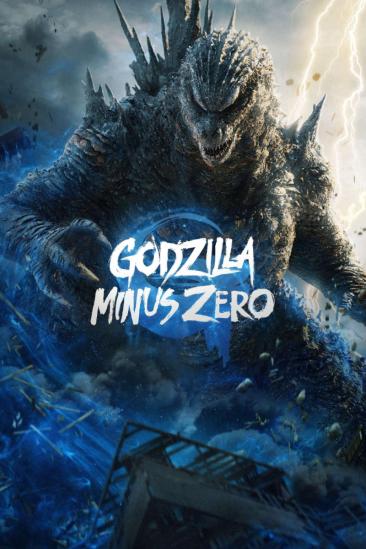
War reduced Japan to zero, and Godzilla plunged it into minus. Two years have passed since then, and the country has faced agonizing struggles to achieve recovery and finally reclaim its daily life...
It took me way longer than necessary to get around to Godzilla Minus One despite the downpour of praise it received upon its 2023 release and after seeing it……yeah, I can see why. It’s a hunk of a film, in that brawny, bruised, old-smoke-stained way you don’t get from movies much anymore; no caked-on MCU banter, no identity-muddled apocalyptics, just a simple movie about fear and consequences that gives its nuclear metaphor, its characters and the famous kaiju the weight and gravitas the genre had been missing out on. The sincerity at play here is almost extraterrestrial. Because of this, I knew I couldn’t afford to miss “Godzilla Minus Zero”.
As much as I really want to bellow “OH. MY. GOD…..zilla”, it’s imperative to admit how this one falls ever so short in living up to the heights from before. Still, this was a damn-near hypnotizing watch.
Takashi Yamazaki’s direction, if you put this film and Minus Zero back to back, feels almost identical in intention, structure, poise, and design. He’s very attentive in weaponizing the kaiju elements through the human melodrama and vice versa much more methodically than the sledgehammer spectacle of American interpretations; even when it gets noticeably silly and absurd, he takes it with a straight face and with unwavering sincerity, tuning each moment not just for irony but for emotional consequence. Although this time, it comes with one slight caveat: the sincerity lacks a crystalline clarity and purpose.
A scenario in which it can aptly get away with window dressing while being slightly unsubtle with its environmental storytelling, Anri Jôjô’s production design does more beyond accurately depicting the era of post-World War II Japan; it grounds the film’s expansive spectacle in tangible, human-scale detail and frames the world-building and the plight of our heroes in a reality where the ramifications of monster-hunting has micro and macro knock-on effects—lived in and expansive enough to where it can breathe around the characters and vice versa. Every set feels weathered, each element quietly or loudly offsets the massive scope and scale of both the monster’s destruction and the radiated stench of nuclear fallout that follows in their wake.
Brutally classical is the best way I can give any credence to this presentation; the staging in general draws on our collective nostalgic memory of kaiju grandeur, while dignifying the genre by building it on melodrama that’s passionately staged with vigor and not many Godzilla movies in general have the ability to make an outlandish concept feel this grounded in human strife. Keep in mind, this was made on a budget that cost A FRACTION of what it costs us back in the states; despite that, you can feel every patient and thorough procedural sequence being stretched to its absolute capacity whilst scaled up to dazzling effect. Kôzô Shibasaki’s cinematography is determined to not waste a single frame; primarily composed at a 2.39:1 aspect ratio, every moment weaponizes fragility with forced perspective shots and framing to emphasize physical weight and distance while this warm soft desaturated look/lighting carries over from Minus One, albeit much more harsh. It means every frame now is practically pregnant with things unspoken.
Ryûji Miyajima’s editing is at the same level of impeccable craftsmanship: simple but effective on where and what to cut to or away from.
Despite being only nine minutes longer than its predecessor, it by no means means the pacing has sagged or dropped off; quite the contrary. Sure, it isn’t as airtight as Minus One, but it also isn’t trying to be; the few extra beats of runtime barely help deepen its emotional payload. Visual effects are an expected upgrade from before, even with the dodgy CGI, and considering how sparingly they’re used, the sparseness of it all gives it a greater sense of intentionality; there’s an intimate focus on how one event dictates and bleeds into the other; dramatic tension is always at a fever-pitch even if a slight degree of the raw, desperate survival anxiety from before is lost, and despite the brevity of the action sequences—only two extended encounters with the monster—they maintain a powerful grip. Each begins with an almost ceremonial quiet, a held breath of anticipation, before unfolding into chaos with a deliberate, escalating grandeur that refreshingly avoids the theatrical excess of the MonsterVerse.
Operatic and overwrought, the tone is appropriately melodramatic and grim in its emotional texture, and with it comes that familiarly unique Japanese melancholy that balances stoicism and heartache even when making room for the occasional, almost ceremonial, camp.
Naoti Sati’s musical composition and score are equal parts triumphant, daunting, rocking and harrowing; doing so much by doing so little with forlorn strings and a dynamic orchestral combo that crescendos up and up to Godzilla’s reintroduction, it nevertheless is the same dark, eerie, dramatically aggressive orchestral soundscape from Minus One….just re-recorded with a much higher emphasis on its dark ambience. Whatever sound design was manufactured by Natsuko Inoue was amplified tenfold by me seeing this in Dolby (the closest thing nearby that wasn’t IMAX)—loud, bold, pure crunchy perfection with detailed sound mixing that’s more manageable than The Odyssey; Aiko Mizushima’s costume design is somehow delightfully drab, building upon the rugged, atomic-scarred aesthetics of a society picking itself up from rubble, and color me shocked, this is the first ever Godzilla film to get slapped with the R-rating. That MPAA rating is absolutely deserved; while only reserved for a few select scenes and the eventual Kaiju battle at the end—which did make me initially question why it was given that rating in the first place—it still leaves its mark.
Needless to say, the cast gamely throws themselves into their two-dimensional roles with gusto and fervor. Each of them has their character trait, and they play it up with the most absolute commitment, so much so that even when they overdo how intense and dramatic they can be, you believe that they believe it. Much of the dialogue feels just as hammy as before even if the conviction and infliction behind those lines remain just as enthralling, and just like before, the large cast of characters involved has this vivid, roaring team spirit and sincerity that isn’t so much deepened as distributed more thoroughly. They’re above functional considering how easily this genre can foster driftless archetypes but unlike its predecessor, which gave its characters an emotional catharsis from all the ghosts they chased down in the war, it isn’t as strong the second time around; few of them are rendered in anything finer than broad strokes.
Ryunosuke Kamiki as Koichi and Minami Hamabe as Noriko enforce the same formidable drive for normalcy and courage displayed in the first film, but while an endlessly empathetic Hidetaka Yoshioka comes dangerously close to taking the crown, that honor goes to Min Tanaka for the exact opposite reason; carrying himself with this justifiable bitterness and edge to his tortured soul, and his hallucinations are some of the most harrowing scenes I’ve seen in a while.
A mostly solid continuation of the story being told from its predecessor, the plot nonetheless harbors the same double-edged sword that comes with most sequels: going bigger with the spectacle and giving us more of that at the risk of isolating the human story that supercharged the first film, especially since wrapping its trauma up in celluloid and nuclear shadow means there would be nothing left to say. Thankfully, it narrowly avoids that pitfall. On one hand, it moves laterally, keeping pace to the same formula without directly reprising the first film beat for beat and fulfilling all the requirements of its genre, before going further to elevate the form to true art. On the other, drawing on the legacy of what happened shrinks the thin veil of metaphor to the wispiest of fig leaves, so to compensate for that, the narrative is given a slender framework to be much simpler. It doesn’t take away how noticeably scruffier it is than before and how many ideas it threatens to casually abandon….but the animated spirit of Minus One remains intact, arranging its human chess pieces with a deliberate, if sometimes mechanical, sense of pathos.
Scene for scene, you can tell its just that teeny bit less polished than its predecessor, but in its best moments, the story finds that common ground to be both a playground for spectacle and a cathedral for grief.
Unlike the way America treats Godzilla, Japan (MOST OF THE TIME) has opted to use the famous monster and its postwar period to play on traditional war-movie tropes under the auspices of its apocalyptic monster battles and call against the destruction caused by nuclear weapons; considering the events of both Minus films happen after the bombings of Hiroshima and Nagasaki—time periods where a censorship unit was in place that prevented the Japanese public from talking or discussing it—there’s poignancy here, deliberately evoked, and it’s not just retro-chic, but an insistence that the past is only ever just out of frame, crowding the characters’ every breath. While Minus One focuses on survivor's guilt and finding a way to live in the shadow of the hopelessness of war, Minus Zero operates on the philosophy of how one chooses to live as a survivor and actually takes to exploring multiple characters, old and new, to branch out and expand that same struggle. Between being anti-US imperialist and anti-war, the film never allows the spectacle to overshadow the humanity at its core. Beneath all the chaos, bloodshed, and devastation lies a deeply heartbreaking exploration of parenthood, complicated romance, the ripple effects on what war takes away from people and how far our attempt to assert some control over forces that seem impossible to harness will drive us into gaining some type of closure; as far apart as these ideas might feel, they’re all roped in toward the same central conflict. It understands that the true horror isn't simply the destruction of buildings or the terror of a monster, but who’ve we lost, the emotional wounds that remain long after the fighting stops….and whether or not dishing that same pain back will truly end that vicious cycle.
Both Minus One and this film are laser-focused on being both an elegy for the dead and a field surgical report for the survivors but unfortunately, I think Minus One nails that emotional storytelling much better. Despite being a continuation, this is still rehashing and reheating the meat on the bones from previously. Just because that is the point behind that repetition—you could call that a redundancy, I’d argue it’s the thesis restated because we’re not done learning it yet—doesn’t change the fact we’re seeing the same beats being played out slightly differently with new characters while piggybacking off of the established cast from before. Its earnestness is a lot more strained than what it deserves, and it can’t escape its heavy reliance on story contrivances especially now that the character drama unfortunately has grown stagnant.
Not to mention it even veers away from the prior film’s apparent nationalism towards a broader critique of governments and systems and their willingness to throw away collective safety at the altar of tactical superiority.
Echoing the wartime morality plays of classic Hollywood despite retreading its stronger points from its predecessor and giving in to the occasional excess, “Godzilla Minus Zero” nevertheless remains steadfast and substantive with its own eternal rot of dense, haunted sadness and deep-seated empathy for the suffering. It never buckles under its own weight, and its ambition, craftsmanship, and cultural authenticity in giving the human story meaning to the destruction unfolding around it cannot be denied.