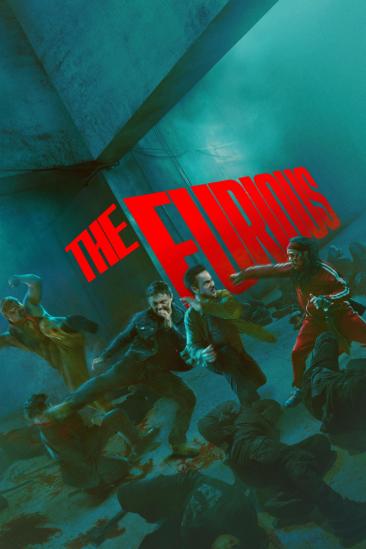
After Wang Wei's daughter is kidnapped by a criminal network and he receives no help from the corrupt police, Wei sets out to find her himself. His only ally is Navin, a relentless journalist whose...
Grandma is the one who put me onto martial arts films—she’s been watching them her whole life, everything from Chinese wuxia to Korean action to Thai kickboxing pictures. I’d never have found my footing in foreign cinema without her. So when “The Furious” started generating serious buzz and the early footage looked like something else entirely, she was the first person I thought of. I wasn’t necessarily sold on it for my own sake, but I knew sitting down with her to watch it was a safe bet.
Needless to say….we walked away THOROUGHLY entertained.
For someone like Kenji Tanigaki, this is right up his alley, and his direction embodies the exaggerated and the expansive with an almost architectural confidence, sprawling outward and upward in transparent, level-by-level escalation. Like a video game ticking through its levels with the volume already at maximum, he gets bigger without ever getting lost, somersaulting through inarguable precision despite not holstering the same meticulous sensibility that elevated the Raid films. He’s fairly experienced in action choreography but given this is only his third directorial outing, that relative inexperience and greenness barely registers.
You look at Pongnarin Jonghawklang’s production design and it just feels like window dressing. Most of the time, it is. But there’s just enough intentionality lurking beneath the semi-oppressive atmosphere to where the locations stop being mere backdrops and start functioning as active participants; the construction actually establishes spatial surroundings, inventive uses of said spatial surroundings allow the confrontations to breathe freely, and a deliberate, pointed symbolic logic to where the film chooses to stage its most consequential moments (i.e, the final showdown taking place in the police department, which is simultaneously both a nesting site for corruption and where justice and transparency should prevail above all else) makes it teeter very much to the point of irony.
Best way I can think of to sum up this movie’s presentation: think Looney Tunes meets slaughterhouse. A crowd-pleaser of the most raucous variety that heightens an already violent world, the admittedly loose focus that strings it all together knows better than to overreach—reserving its complexities strictly for the frame to round out the one route approach of the plot and that bears its teeth the most through the cinematography; Meteor Cheung frames all the action running like its coked up on Red Bull, with such brutal clarity and a chemical radiance behind the lens while wisely staying away from disorienting shaky cams and annoying quick cuts. Not to mention, the lighting and color grading bring out some really dynamic shots and capture unexpected delicacies and flourishes amid otherwise crunching dustups.
Chris Tonick makes sure he picks up the slack; his editing weaponizing and capitalizing on the film’s momentum.
Such a movie, focused almost exclusively on the action, means the pacing needed to be tight with no patience for fat, especially when the runtime is an hour and forty-eight minutes, twelve minutes shy of two hours. Thankfully, it runs like a lit fuse—short enough that you never feel the burn slowing down, long enough that the escalation has room to stack. The demands are relentless and the breathing room is scarce, but its pacing that rarely buckles under its own weight. The heavy reliance on practical martial arts means there’s very little in the way of digital effects and CGI; what little does pop up on screen thankfully isn’t jarring, both the physical and emotional stakes are serviceable at best given the subject matter, and the overall tone is very grim. Even though the action adds some unintentional comedy to it, there’s also a tragic undertow that the film handles with surprising restraint.
Forgive me for beating a dead horse here…but the action sequences really are THAT DAMN GOOD. Every set-piece carries an angular, tactile physicality—inventive but inelegant, bustling with intricate choreography and completely unconcerned with form, and the incorporation of Chinese and Indonesian fighting styles among many others means you can feel the fury behind every punch, kick, and smash. It’s Hong Kong martial arts mayhem at its finest. However, because the action is otherwise so well executed, it’s a little disappointing when characters absorb punishment that would hospitalize a real person and walk it off like a bad hair day, undercutting what it sells you on. The brutality earns its teeth right up until the durability asks for it back. That being said, leaning into its own absurdity in a film this gleefully unhinged feels less like a flaw and more like the entire point.
Olivia Xiaolin’s musical composition, alongside Elliot Leung and Flying Lotus’s collaboration, cooks up an electronic, heavy-rock hybrid that feels like it was engineered in a lab specifically to make your sternum vibrate. Loud feels too polite a word to describe it, considering the pulse for the score borders on tachycardic, functioning both as wallpaper and second cinematographer to barrel alongside the chaos. Sound design from Hang Shao is heavily immersive even before the fighting kicks off, much of Dammaros Sukhaboon and Chung-Man Yee’s combined costume design structures everyone through social standing, professions or occupations at a glance—plain and unassuming but no less functional for it, slotting neatly into the film’s elementary approach to plot, and need I say more about the MPAA rating? It’s rated R in all its bleak, sensationalist glory stamped like a badge of honor, making no apologies for its own gruesome excess while thankfully not dragging it out too much to the point of overkill.
Acting was never going to be the headline here, and it isn’t…but there’s a genuine, stubborn commitment radiating off of everyone permeating the screen that you can’t help but respect; an international cast all gathered from East and Southeast Asia, each carrying a different country’s fighting tradition in their hands and feet, and nobody feels wasted…which makes it unfortunate that the try-hard dialogue is clunky with terrible dubbing (the few that almost feel like something don’t always stick the landing) and the characters barely fare any better. Most of them are begrudgingly simplistic to the point of being one-note—the main antagonist and his criminal enterprise being equally generic and uninteresting—with only a select handful breaking the mold by virtue of sheer screen presence.
Miao Xie is technically given the hardest job as the lead, portraying a mute character that has to rely on his facial expressions, body language, and fists to do most of the talking, but he clears that hurdle with emphatic conviction. Joe Taslim shoulders through being more immediately vulnerable than his co-star through sheer raw exposure, and Brian Le makes up for his character’s lack of personality by being absolutely FERAL and relentless as this obvious physically intimidating tank of the group.
Action movies like this one tend to organize themselves around one of three narrative philosophies: the pure-action approach, where plot is little more than a delivery mechanism for the next fight; the conventional dramatic model, where story and spectacle are kept in reasonable equilibrium; or the precarious middle ground that tries to marry both and usually ends up in couples therapy assuming they don’t botch up the fusion dance. Normally, this would land in the first camp… but the execution kinda threads that needle so precariously that I think it fits in the last category. The plot of this movie is basically the premise of Taken reimagined and ratcheted up to 11, while simultaneously being incredibly boilerplate in equal measure; rudimentary and far from innovative, you know exactly what you’re going to get—corruption bad, child trafficking is deplorable, the resolve to protect/avenge the innocent above all else, unstoppable protagonist, shadowy criminal empire, the race against time, etc. So much of this leans into familiar exploits of the genre that the ending is never really in doubt.
And yet for how straightforward it gets, there’s an undercurrent of emotional intelligence here that I almost completely overlooked.
For a movie clearly basing itself around a dark subject matter that immediately gives the story enough emotional weight and a clear motivation for the protagonist to bounce off of, I was actually surprised by how much time and attention were actually properly directed towards that upon reflection and a rewatch. If you want to be charitable, there are three revenge subplots that do technically converge between Wang Wei, Navin and the overarching trafficking narrative while coming into view of the masses, and an overwhelming sensation of unity reveals the human desire to protect the innocent above all else in the face of those injustices. Despite being so simple and unassailable that they’re hardly worth exploring or dissecting further—especially with it literally laying all of its cards out on the table—that’s what shines through the most in this film: unsheathing the meditation on what we do with grief, contrasting genuine familial connections with weaponized ones, systematic reckoning and how the very idea of family itself can be dangerous once it becomes the thing worth burning everything down to either protect, establish or destroy.
You can tell there is some attempt at lining up the film’s title, where anger is literally the scaffolding that every major character is driven by in some way. Whether righteous, corrupted, or somewhere in the middle, it surprisingly doesn't come off as schematic and it’s actually class-conscious, practically Dickensian in its sympathy for capitalism’s castoffs and casualties in a manner we don’t see often from action movies, highlighting how often these crimes are happening in the slums of cities and targeting people the public may not truly miss. But at the end of the day, this still boils down to basic human empathy and forgiveness winning out against the unchecked horrors of exploitation and indecent cruelty; it really is that damn simple, and it doesn’t try to be anything more or less than that.
If the amount of times my Grandma audibly screamed “I’ll be damned” at the screen isn’t enough indication, “The Furious” had us both frothing at the mouth like rabid animals watching this. A sloppy, brain-dead symphony of blood, skull-bashings, and semi-unpredictable beat-em-up mayhem that iterates with the best of its genre and never allows you to go numb, this melting pot of relentless energy overcomes its boilerplate plot and shoddy dubbing to deliver one of my best viewing experiences in 2026.