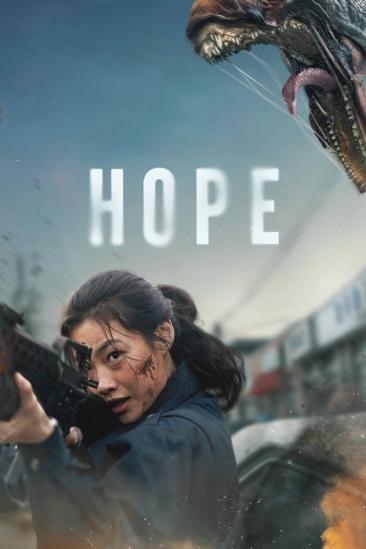
In the remote South Korean village of Hope Harbor, police chief Bum-seok and officer Sung-ae are called to investigate a mysterious creature wreaking havoc on the community. But all is not as it se...
“Hope” is a strange commodity that operates as this bizarre and volatile currency; this weird South Korean melting pot of ideas is an amalgam of clashing vibes, discordant tones, unresolved chaos and bedlam that never coalesces and resists any synthesis.
Na Hong-jin’s direction is one that performs on two different types of maximalism: the regular kind and one of uncommon, yet persistent patience. Frequently repetitive yet so viciously assuming of the documentary-like authenticity that most monster movies live and breathe by, I appreciate the intention behind building not just through escalation but through accumulation of the more mundane details of the situation; even when the carnivalesque ricocheting leads to many factors being both overfed and undercooked, it also makes it hard to look away.
Lee Hwok-young, for a good chunk of the feature, has to do most of the visual storytelling, using his scattered production design to implant fright by showing the aftermath of its rampage caused both by the monster’s physical destruction and the humans' more subtle ignorance to themselves and their own surroundings; it gives everything enough of an otherworldly feel, like each location is lost in its own way.
With a budget of about $50 million (by far the most expensive South Korean film to date), the general guise of this presentation extends beyond clashing violent small-town comedy and big-budget Hollywood imperialism….or at least, that’s what it aspires to be. There’s some wit to its drawn-out approach, proving that the patient setup has its uses, but it’s still a ‘looking at the glass half-empty’ scenario where every ounce of visual cleverness is undercut by a too-fervent reliance on serially mood-breaking slapstick and the omnipresent impulse to treat every moment as opportunity for either gentle ridicule or melodramatic bathos that it doesn’t quite earn. And that only makes the juxtaposition with the film’s other technical elements all the more frustrating; in particular, Hong Kyung-pyo’s cinematography is absolutely gorgeous. Utilizing a 2.39:1 aspect ratio alongside digital Arri Alexa camera’s, his camerawork is stingy with long master takes, fluid tracking movements, and a video-game-like lens distance relative to the characters and objects; just like Parasite, its all about compounding that already visceral sense of scale.
Sun Min-Kim’s editing further compounds and doubles down on that visual philosophy.
On one hand, for what it is, the pacing is not that big of a turnoff; it manages a decent enough tempo that harbors enough momentum to keep it sustainable. But on the other side of that coin, I have SERIOUS protestations about this runtime being over 156 minutes long; there’s no excuse for that especially when you can actively see the quality of the movie decline quite significantly. Despite how textured and fully realized the visuals are, the actual VFX and CGI is practically begging to be laughed at—cheap, cartoonish, very low-rate with a SyFy/early PS2 graphics aesthetic and such an unnatural weightlessness that they fall straight into the uncanny valley and immediately takes you out of the experience; the absurdist comedy is more of a distraction rather than something resembling an extension of the movie’s theatrics; it follows the Jaws the school of tension and suspense with remarkable precision and intelligence…right up until its stops holding back, and for the most part, what encompasses the action sequences might as well be kinetic delirium. Stretching them out to an almost luxuriant degree, each one loosely resembles a woodland western either in poise, scale or scope, even if they can’t avoid excessive repetition despite the sheer quantity of them.
Tonally speaking, there’s something wild and deft about how almost gleeful in its carelessness it is—pivoting without warning almost like its daring you to try and make sense of the carefully constructed fences it itself kicked over, and the way it abruptly shifts in a very confusing way, mostly to lay the groundwork for a sequel we may or may not get….is kinda putting a boot in everything.
Michael Abels’s score is atmospheric as all hell; befitting that of an apocalyptic old-school monster movie, centering every timbre, string and note like it can’t stop sweating from its own anxiety; sound design from Sung Ron Choi and Nick Interlandi among others is texturally as maximalist as the rest of the design, being purposeful in this deliberate slow, grating overload; Cho Hee-ran’s costume design goes only as far as categorizing the jobs and hobbies of certain individuals, but it does that job exponentially well, and you can bet your ass this MPAA rating was accurate all the way through; mangled bodies and animal carcasses, buckets of blood everywhere, constant expletives—this had R-rating written all over it.
It feels redundant trying to pick apart the acting here: regardless of whether they’re acting in their character’s specific parameters or not, each actor operates with such committed conviction that their work transcends the thin archetypes they’re given, elevating every scene through sheer force of presence. Dialogue isn’t all that special to pick apart and dissect however, and most of the characters, despite being presented in broad strokes and thin sketches, are equipped with both understandable empathy and ignorance. The downside to that is that because the movie is basically built around huge action sequences, character development is secondary and has to be squeezed in between; unlike, say Fury Road, it never quite manages to develop its characters through the action itself.
Michael Fassbender, Alicia Vikander and Taylor Russell might as well be extended cameos; Hwang Jung-min infuses his role with a shaky, almost comical devotion to his duties similar to that of Chief Brody; Zo In-sung plays up his character’s seemingly immortal nature to an amusing yet headache-inducing degree, and then there's Jung Ho-yeon. It’s been forever since I’ve seen her since Squid Game, and she still supplies this coiled ferocity and sharp tongue with bombastic fervor.
When it comes to narratives in monster movies, they follow a similar path of trajectory as zombie movies do, i.e, the zombies being secondary nuisances and the real threat being how quickly we lose our humanity amongst the need to survive (as well as how often we as the audience must suspend our disbelief to buy into the emotional damage). Hope more or less follows the basic guidelines of that formula before branching out; it starts off relatively small and the story is at its most consistent when its routine monster invader plot stays strictly as that. That being said, there is a novelty factor to how confoundedly off the rails it goes also but the elaborate game of hide-and-seek in the beginning remains the story’s most successful trick and even when it starts getting puzzling (not if, WHEN), you’re never actively bored.
Then we get to the second and third acts. And you can actively feel the momentum behind to slowly sap itself dry like a Death Valley sprout; I can overlook the characters not being that deep or the movie not being that layered or complex because the story is meant to be simple (and it barely even has one to begin with). But my god, did it really start testing my patience; not only do they start exhausting a lot of the ideas they bring up, the way the story always threatens to break into new thematic territory but repeatedly circles back to well-worn grooves shows how very easily it plays nearly all its hands. It’s three different movies at once and only half of them work; there’s never a sense of cohesion as it meanders about despite clearly going for spectacle, and the screenplay being as hollow as it is with a steep and severe lack of consequences to really anything happening on screen; not to mention, going back to the well with the chase sequences means the action spectacle follows the same downward spiral, going from suspenseful, and badass to stretched-out and over-fantastical, thanks to heroes that simply cannot die. Dare I say: it’s like a Korean Michael Bay movie plot.
Thematically, its messages are meaningful but they’re either recycled from stuff we’ve already seen pulled off in better projects or just completely go out the window by the time we get that abrupt narrative shift; dealing with paranoia, compartmentalization and how this naked sense of self-preservation robs you of humanity more than it helps keep it, proving that the inhumanity of the townsfolk was not just comedy for the sake of comedy. Again, this isn’t entirely new: The Babadook captured the acute reality of living with grief we couldn’t overcome; Cloverfield distilled the heartsick chaos of watching your hometown try to make sense of a senseless attack; The Village for all its flaws made for an interesting parable of the consequences of surrendering to the things that scare us. So this movie’s pattern of ignorance leading to fear to preemptive violence to retaliation and then greater violence means the repetition and lack of explanation does have a point to it…..but we still don’t know what all of this is really about beyond misunderstandings.
Between its motifs of xenophobia and invasion from outside of South Korea’s borders, I don’t know if it’s a commentary on America’s capitalistic colonization of Na’s country, which forces them into conflicts that otherwise wouldn’t concern them or perspectives meant to dehumanize immigrants in hours of crisis; making the aliens sympathetic as late as they made them definitely crippled the potential it hoped to achieve. Not that I don’t mind there being an intention to put us into the perspective of the aliens, but it’s too quick, too vague and doesn’t harbor enough time to make us feel anything at all. All of a sudden we're diving headlong into a mythology and names that we really don’t know the first thing about before being sprung up on us in the last hour, so the damn thing can’t NOT feel out of place; probably the reason why Na Hong-jin decided to shift his weight toward a possible sequel. But even so, he left himself in a shaky predicament to get himself out of; this feels like a Drake Of The 99 Dragons situation where even if you trudge past the main thing holding the experience back, there’s a thousand other paper cuts that required surgery.
Because the film functions like your typical commercial survival blockbuster, the way it tries to juggle its grand philosophical approach feels very counterintuitive, especially when it’s steamrolling along with the film equivalent of a 30-minute hydration break. How ironic that the movie gets significantly worse when it actively tried to be about something.
An infuriating mishmash of exhilarating highs, head-scratching lows and an indecisive structure that lacks such a consistent purpose and follow-through it actively feels like its trolling you by the end, “Hope” thrives on friction but to the detriment of those very sparks threatening to consume the entire set, honoring its allusions and undercutting them by laziest possible means.