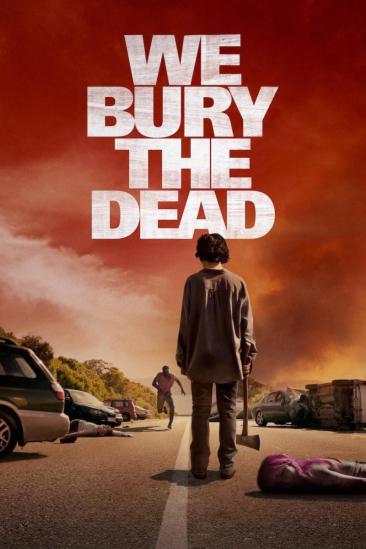
After a catastrophic military disaster, the dead don't just rise - they hunt. Ava searches for her missing husband, but what she finds is far more terrifying.
As we now officially blow past the halfway point of the 2020’s, my ceaseless grind of movie-reviewing and nitpicking continues with the latest specimen on my critical operating table: a prototypical zombie survival movie called We Bury The Dead. Nothing says "Happy New Year 2026" quite like watching the undead feast on human entrails…..
….or forgoing the usual rampaging hordes and violence for dramatics about the desperate need for closure? That works too, I guess?
Wrestling pragmatism and coldness with a rather staid theatricality unfortunately, Australian director Zak Hilditch’s approach is one that really tried to eschew the sensationalist notions that come with this zombie sub-genre to the best of his ability. Contemplative and intimate, his direction stages everything with this flat, lived-in inertia that feels numb by design while paradoxically poking you awake with this mirage that can’t help feeling amateurish.
Clayton Jauncey’s production design takes this sparse and expansive tour of Zak’s native Australia and not only gives the domicile domestic landscape an evasive rotting decay that's only slightly askew from the norm but it never quite tipping into full nightmare makes the quiet visual beauty unsettling precisely because of the context. Staging this supposed apocalypse as a localized pocket, it bolsters the dour, near agoraphobic atmosphere of a pandemic contained as opposed to complete societal collapse with an admittedly strong sense of scope to offset the small scale. All signs here point to a production stretching and squeezing every penny from its modest budget just far enough to make the presentation create an illusion of scale that belies the film's independent roots and its worldbuilding creates parameters where the incident and perilous aftermath do pervade and add just enough ironic uncertainty to the proceedings, especially since the turn of events that put the plot in motion doesn’t seem awfully far-fetched given the clown show that is you-know-who’s military.
Between slow ominous pans, close-up portraiture poetry and evocative, if not serviceable framing from Steve Annis’s cinematography, he constantly straddles the line between brilliance and banality. It’s all strikingly photographed and picturesque but there’s a frustrating lack of imagination in the visual execution, even with the decent lighting and Merlin Eden’s editing helping buoy the visual aesthetic with poise.
Despite a few significant lulls halfway through that fails to justify the laborious pacing, the methodical rhythm behind it does serve its purpose while offsetting the reflective and admirably somber tone. The runtime makes its acceptable 94 minutes digestible enough without overstaying its welcome despite the frustrating abbreviations that left a few promising narrative threads dangling like severed limbs, there’s nothing short of fantastic minimalist monster makeup from Jason Baird and his prosthetics team, VFX has one major splotchy area that stands out amongst the otherwise serviceable digital craftsmanship and in what’s guaranteed to ruffle some feathers for a few audience members, there’s an almost perverse lack of urgency and tension; I can make peace with why but others expecting pulse-pounding zombie action will find themselves shifting restlessly in their seats.
Clark’s (yes, really, his name is just Clark) propulsive-electro surreal musical score never quite gelled with the smoldering landscape of sun-baked dirt and withered eucalyptus, but the disconnect wasn't jarring enough to take me out of the experience while the rich sound design gently builds up an aural tapestry to the island. Most of the costume design makes use of utilitarian, layered clothing with muted colors but none of them truly stand out, it's unambiguously deserving of its R-rating and the few action sequences there are present are both procedural and hampered by the film rarely deploying the zombies as a credible threat or a jump scare.
Even with much of the dialogue being accordingly muted, the characters all suffer from rather two-dimensional or remedial characterization; however, there’s just enough building blocks for them to maintain a faint pulse of intrigue—credit due entirely to the cast wringing every possible drop of nuance from the parched script.
It’s been a long while since Daisy Ridley has appeared on my radar but she delivers her most spirited and passionate work I’ve seen in years— or at least makes a valiant attempt. Very subdued and one where her eyes do most of the talking, her performance is one of remarkable restraint, communicating volumes through subtle shifts in her gaze even with her accent going in and out. Mark Coles Smith and Brenton Thwaites can’t turn chicken shit into chicken salad with how little they’re given and how valiantly they have still milk it for nuance and all its worth.
We all know the tried-and-tested zombie formula; the real monsters aren’t the brain-eating living dead but the survivors forced to abandon their humanity along the way to survive and while I do get some mileage out of this trope every once in a while, it has become a wee bit exhausting. Really, you hardly even get credit for rehashing this insight because its practically mandatory for entry into the genre; hold up this film against 28 Years Later or any recent undead offering, and the similarities become so glaring you'd think they shared bits of the same decomposing screenplay template. That being said, with such a linear focus and structure, this narrative carries itself with a lot of pathos that lingers beyond the promising set-up. Patiently somber with its central focus on vibes and mood over kinetic action as a character-driven drama, its rather lukewarm in the grand scheme of things and any pre-conceptual expectations for a Down Under dead-above-grounder with a government conspiracy twist and bureaucratic paranoia will immediately be quashed for something more show, don’t tell. It never strains for topicality, letting any echoes of current tensions speak for themselves and barely skimming the surface of philosophical horror beyond what one can still recognize in an ambling corpse.
Crystalizing both respect for the dead and the tragedy of both their passing and their resurrection that’s uncommon for the genre, its a story that both respects and refuses the idea and circumstances around closure—and in that refusal, the film finds its only honest pulse and sharpest sorrow through this road odyssey. If even the recently deceased can hold onto the best of themselves when they pass on, what’s keeping the living from doing the same? Sometimes there is no comfort in catharsis, just this throbbing hum that you have to make do with. Admittedly, bits start sticking out like sore thumbs and there’s a sketchiness to each new development that cripples its sense of momentum if you linger on it for too long but that is the inevitable downside of taking a more existential route; not all of these questions will get answered.
However, this is still very circular storytelling that builds up a lot of apathy and ennui for the inevitable conclusion that comes; either its novel when it pushes itself to feel meditative or strictly routine when it doesn’t and the narrative is self-aware of its own hesitancy to steer clear of the well-trodden path, especially when it comes to the zombies. Zombies have long served as cinematic metaphors, and Hilditch’s narrative briefly flirts with the provocative notion that these particular walking corpses might retain something worth preserving. Unfortunately, the promise it initially holds just withers on the vine; every time it inches closer to committing to its own idea, the film backpedals and retreats to the safety of genre conventions we've all dog-eared to death. Even with what it touches on regarding the nature of self-recrimination, it’s smart enough to not completely abandon and hand-wave it but at that point, it just feels like inconsistent key-jangling with the sheer volume of half-gestures it leaves hanging in the stagnant air like smoke from an unattended cigarette. The question of ‘How much of a zombie movie do you want to be?’ hangs over everything and it never gets a clear answer.
Ok, here’s a bit where I gotta talk out of my ass for a few seconds; one constant thread that runs concurrently amongst examination of grief and closure here is motherhood. There’s familial struggles, an inability to provide for them, infertility issues and this longing to bring life into the world and care for it. Even if we take into account that all of this grew out of Zak Hilditch traversing through the personal loss of his mother to breast cancer, it feels like the one area of the film that unfortunately has the least amount of care crafted into the narrative to feel natural among everything else, which is a big issue since the main character has a largely stunted, frustratingly vague backstory that doesn't heighten that bit of emotional urgency she has to portray. If anything, Ava's recurring encounters with spectral deceased families turned by the incident illuminate the thorny emotional landscape she navigates, though these moments offer only fleeting clarity.
A lot about this plot thread feels strictly counterintuitive to me since a good third of the story clearly wants the motherhood theme to stick. The film gestures vaguely at profound statements about creation in the midst of destruction, yet it never gets around to actually saying anything interesting about motherhood for it to resonate long after the credits roll, especially after that ending.
Playing a bit like an acoustic cover of a 28 Days Later-style zombie-sociology thriller—all stripped-down emotion and raw nerves instead of adrenaline-pumping chase sequences—it’s hard for me to put down We Bury the Dead for attempting a minimalist approach to the undead and what they represent but I still can’t overlook that even minimalism has to earn itself by being, well, minimally interesting instead of just minimally lit. Its restraint feels pointed but it trips over it often.