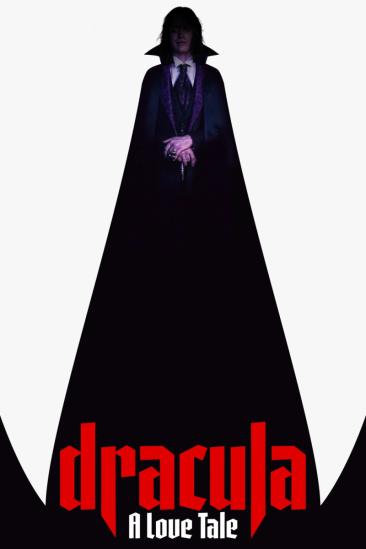
When a 15th-century prince denounces God after the devastating loss of his wife, he inherits an eternal curse: he becomes Dracula. Condemned to wander the centuries, he defies fate and death itself...
Bram Stoker’s “Dracula” isn’t just a pop culture icon; it's a cultural phenomenon that continues to fascinate audiences. The character's enduring appeal can be attributed to the timeless themes of death, immortality, and the human condition that are woven throughout the novel, so between that and the run of movies the character has taken part in, there’s always this weird reassurance of how inevitable these iterations seemed destined to pop back up. No matter how much they wring out and bleed this story dry, he will rise from the depths of hell to haunt us again.
Luc Besson’s iteration of the story is WEIRD. Like, bananas, nonsensical, cuckoo chachoo without much oversight or vision.
Even without needing to bring up the Maïwenn Le Besco incident and the various other sexual assault allegations brought up against Luc Besson, his warped mindset when it comes to directing just……doesn’t seem to exist here? Sure, he has a sure hand in panache and dopey maximalist fantasia but his direction is so indifferent, so stiff, he can’t even pretend to offset how garish and cheap everything comes off as. Outside this weird self-compensating sense of humor, the very best he can do with his auteurist leanings is supply a go-for-broke energy to keep the festivities entertaining and even that has a shelf life.
Part of me is both aroused and perplexed with the overall look of this film with Hughes Tissandier’s production design being right bang at the center for it. Very low-rent but ornate and surreal in equal measure, some of these locations have an opulence and authenticity to them that makes it breathtakingly gothic and while it can’t hide the exotic locales being obvious indoor soundstages, somehow hopping between medieval times to 19th century Paris to Finland garners just enough stunning sensationalism to have one believe it was a showcase. Except…they’re all nothing short of theatrical eye-candy. It boasts the delicate scaffolding of a world that pretty much lives and dies on the immersive storytelling bolstering it and its historical atmosphere….and yet, the way it plays fast and loose on history makes it lose its Vaudeville edge, diluting its already frail sense of scope and scale; the complete removal of any semblance of atmospheric dread is just the icing on the cake.
Stuffy and overblown, the overall visual aesthetic doesn’t lead to the presentation carrying its own distinct aroma; its more video game-adjacent but the type where one distinct visual or thematic idea took precedence the most and everything had to be mangled to fit or bolster that specific feature. Honestly, that’s how the entire rest of this movie operates; no matter how minuscule or massive, every individual component here is in a massive tug-of-war with the other and nothing quite comes together to form a cohesive whole. Like, you look at Colin Wandersman’s camerawork from first glance, it looks appropriately cinematic with its gothic lighting, adequate framing and the vast majority of its Flemish watercolor, paintery compositions. But it does NOT help that many of these shots look stolen, frame for frame, pixel by pixel, either from Francis Ford Coppola’s 1992 iteration of the story or 2024’s Nosferatu. That goes beyond spiritual homages; that’s just straight up plagiarism (ironically, something Besson has also gotten in trouble with in the past).
And when Lucas Fabiani isn’t editing in this scratchy, jittery flourish reminiscent of a Bollywood musical number (and I thought the last film I watched was infested with those), the rest of his editing is fairly straightforward, although it does rear in like an illogical, modernist bit of hackwork.
Surprisingly, the pacing felt rather poised and relaxed here despite rocketing through centuries of lore and character development with a speed that should feel jarring and carrying on for over 129 minutes? It’s very bloated as per most Besson films. You’re gonna look at the visual effects either with this weird elated tickling of laughter or total befuddlement at the random, deplorably ugly CGI gargoyles among other things (and there’s no in-between), its easy to tell which parts of the movie strain harder than others due to the restricted budget, the tension is completely artificial, whatever action does occur is either blandly basic and inoffensive with no aplomb or gusto and as for the tone…..oh boy. Despite my predilections, I can tell there’s meant to be an inherent silliness to bolster the flourishes but my god, it cannot make up its mind. Between its oddly broad humor, rather flimsy horror or bungled flights of fantasy both in practice and execution, this attempted venture into camp just feels erratic and stutters.
Danny Elfman’s gothic, swelling, dramatic score gives the film a much need pulse, reaching for a more lyrical, wounded romanticism that also bares a striking resemblance to Wojciech Kilar’s work on Coppola’s film. Sound design is impeccable for how off-kilter the film already presents itself as, its next to impossible to disregard how extravagant and opulent Corinne Bruand’s costume design is among the semi-period “richness”, the layers of makeup used are grotesque yet striking, and the MMPA rating…..doesn’t quite feel earned? Yes, its a very obvious R-rating; it wouldn’t be a Dracula film if it wasn’t but because the narrative avoids violence and intensity to such an extent, it drifts toward a more family-friendly register that the script does little to compensate for or work around. It’s hyper violent one moment and humdrum in others.
From the first frame onward, I knew the performances were going to vary; some are overacting, others are underacting, the rest are constipacting or playing it straight and while it does add to the movies overall oddball eccentricity, that’s all to a fault. Meanwhile, the dialogue everyone’s been given ranges from stilted to expository to childish within a heartbeat, which—Okay, that would’ve been acceptable if I could actually remember or grow attached to any of these ciphers you call characters.
I don’t want to call Caleb Landry Jones a wish-dot-com discount version of Dracula; the man is clearly having the time of his life hamming up this suave, dandy ferality that infects his every waking moment on screen and it clearly shows his commitment to the bit even if his other attributes work against him; he’s the only one who feels the closest like an actual character, however. Matilda De Angelis comes a close second with her infectious energy, Zoe Bleu has an interesting dynamic upon playing two characters but is given little else to do beyond getting swept off her feet and Christophe Waltz plays everything so matter-of-factly that he’s just sorta there.
Hate to say it but there was something vaguely interesting about the specifics surrounding this iteration of the tale that gave me enough pause to be curious: focusing more on the tragic, romantic backstory of Dracula and his obsession with a reincarnated love while also dining in the operatic absurdity of the original framework by attempting to see it through a more poetic yet overwrought lens. Within the already narrow framework of Besson’s reimagining lies a loose brew of folklore and melancholic kitsch that does present an intriguing iteration that captures a crisis of faith, religious betrayal, and a more romantic version of yearning on occasion....so why, pray tell, does everything surrounding that scream of a rushed book report? Putting to one side that this is simply the basics of the famous story and only the most fundamental parts of it stitched around what feels like elaborate fan-fiction (extensive liberties were taken with this source material after all), its an amorous and tame retelling that doesn’t come the closest to being scary. Lacking the the narrative clarity or psychological sharpness of other more iconic adaptations, it’s tedious at best and questionably contrived at worst.
Everything is in-your-face hamfisted to make up for how quickly the narrative thins out going into that climax, especially since the stakes in this vampire hunt are so brittle to the point of very little opposition by even the church's lackluster pursuit and when its not copying conceits from other versions, its hesitant to dive into the few nuggets of ideas that are present here. Think about that; a vampire movie that continues to stretch the mythology out just by existing, buttplugged to the brim with enough emphasized overtones and reduced undertones to open a cathedral and the litany of its focus seems centered entirely on the vibes.
The change they made to Dracula’s method of intoxication of the women around him might as well be the equivalent of date-rape drugs, they abort on or brush any logistical vampire lore under the rug while awkwardly and inexplicably inserting other random elements, and for how much the movie dives into how far one would go for love, the repentance of one’s twisted actions and the thin line between desire and possession, the thematic emotional undercurrent meant to drive Dracula and Elisabeta/Mina’s relationship only has a satisfying ending with its beginning and middle section handicapped by the actors stilted chemistry, how much time they spend apart and Besson’s own lack of sensibility around the subject. The empath in me tried jumping through a lot of hoops to buy into the love story as there are some charming bits but it never rises above being mediocre and it does skewer your perception of Dracula from the get-go when he blames God for Elisabeta’s death, despite him being the one who accidentally killed her.
Sometimes it plays so fiercely beholden to the tale to its detriment, and other times it sways so far out of left field like an SNL digital short which feels bizarrely par of the course due to its insistence of style over substance.
Blurring and crossing the delicate line between homage, imitation, inspiration and derivative cribbing in a bid to overwrite the legend, this glossy iteration of Dracula has a lot of jagged edges that lack the narrative clarity or psychological sharpness of other more iconic adaptations….but there’s also enough over-the-top, ironic charm for the feature to have ‘guilty pleasure’ written all over it.