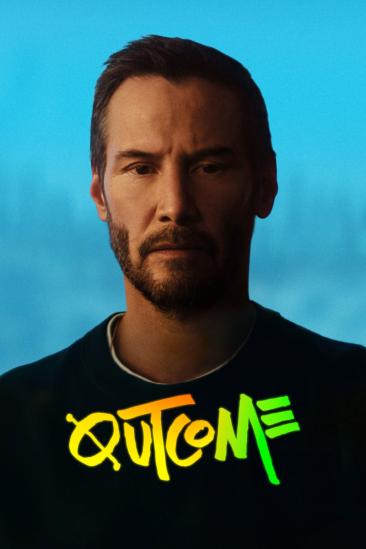
Reef Hawk, Hollywood's poster child since age six, is not okay. When he learns about an extortion plot tied to a mysterious video, Reef preemptively sets out on a redemption tour to make amends, co...
Around the time I had gotten around to seeing the disastrous “You People” back in 2023, I had stumbled across Jonah Hill’s latest controversy—you know the one, when his ex posted their private texts to 50 million people, got him labeled him emotionally abusive overnight, and forced him to vanish from public life for three years of imposed exile. And this merely tops a growing list of controversies surrounding the actor-director already. Now, he returns to bring us “Outcome”, an apparent comeback vehicle that plays less like genuine artistic expression and more like a mid-sized vanity tour just to try and save face.
The long and short of it? It ain’t worth the price of omission.
Once upon a time, there was a warmth and irreverent charm to how Jonah Hill approached the first movie he directed that I could appreciate even if I wasn’t moved by it; here, his direction feels oddly flat and too gentle for the subject matter he looks to tackle. Don’t get me wrong, his instinct for identifying the heart of a dramatic scene and turning the volume of the storytelling down low enough for us to hear it beating is still there in spades but its buried under so much posturing and self-indulgence sprawling across the screen like an untrimmed hedge.
Aesthetically speaking, I don’t hate how the production design looks. K.K Barrett concocts a very stylized, strong modern pop-art landscape that’s designed to feel simultaneously real and artificial—think Edward Hopper’s lonely urban tableaus reimagined through a Wes Anderson filter that somehow manages to feel both meticulously arranged and emotionally sterile. Said spaces are constructed with such self-conscious precision, however, that they paradoxically draw more attention to themselves by trying so desperately to appear unobtrusive; you can’t really pick up much of an atmosphere here as a result and what little does exist is very fuzzy to the point where the scope and scale vastly overshoots beyond the perimeters of what this film actually earns.
Nothing about its presentation stands out enough to either stand on its own or compensate for its deeper issues; even if you make the argument for it somehow being a post-punk Freudian nightmare disguised as a sad man's manifesto, the overall plot structure is guaranteed to work against itself. Whatever visual/technical flairs it tries to throw our way, try as they might, barely improves upon that. Benoît Debie does make the trudge of getting through this film somewhat easier to look at with his cinematography, highlighting unexpectedly lush shadows, neon lensing and hyper-saturated framing through the most simplistic of camera angles and shots. It does have somewhat of a personality by augmenting its beauty to keep you at a distance….but at what cost?
I can’t say much about the editing; it mostly does its job without any major complications.
For an 88 minute runtime, the pacing is wildly off base. It drags on exponentially with many scenes feeling stretched out with no explicit purpose and no exact metric on a specific speed, rhythm or momentum it has to abide by to keep interest. Visual effects range from adequate to questionably spotty either due to the use green screen or rather crummy filters, tension is nigh nonexistent throughout, all of the humor takes a right nosedive even with the rare black-comedy elements that should be legitimately funny, and the obvious point is obvious: the tonal whiplash in this movie is insane in how the constant careening from introspective character study to deadpan indie drama to broad stoner-esque trying too hard comedy left me seasick. Like, its bad enough that the film can’t commit to a single lane and actually stick to it but it gets particularly dispiriting when the literal second Jonah Hill’s character pops up on screen, that entire scene gets hijacked.
Even with the occasional odd note or so I found myself okay with, how Jon Brion composed most of the score and soundtrack did little to create or reinforce any emotional weight it wanted me to feel. Most of the sound design is broadly fine but lacks distinction to truly stand out, costume design does the bare minimum of signifying somebody's social stance or persona, otherwise, I can’t remember a single one and as for that MPAA rating, it’s an obvious R-rating while simultaneously barely feeling like a flash in the pan. Outside the excessive repeated use of gratuitous profanity that peppers every other line of dialogue, there’s nothing particularly mature or boundary-pushing to justify the restricted designation.
Considering the cast they have here, it’s hardly shocking that the acting stands as the film’s lone reliable pillar. These performers possess the chops to transcend mediocre anemic material, and occasionally strike silver despite the limitations. Yet watching gifted actors of this caliber find themselves handcuffed against such thin material is like seeing an Olympic swimmer thrash through syrup (and not in the Mythbusters fashion). It certainly doesn’t help that the dialogue, despite some occasional zingers, offer nothing but empty calories and the hollow, rather one-note characterization and two-dimensionality to them isn’t much better.
Martin freakin’ Scorcese delivers the film’s sole genuinely affecting performance—precise, nuanced and masterfully shapes his character in such a way that it stands out in stark relief to everything around him. Matt Bomer plays the stereotypical gay best friend trope as well as he can, Cameron Diaz is believably glib yet raw to a fault, Keanu Reeves’s trademark stoicism and reserved demeanor feels surprisingly miscast for a leading role that requires a lot of emotional range and introspective vulnerability for our supposedly complex main lead and it took Jonah Hill absolutely no time to get on my tits. I understand being intentionally abrasive and digressive is meant to be the point of his character but either I’ve grown up or his particular brand of irritation is just no longer charismatic because he actively had me contemplating shutting the movie off earlier than I planned…..and he does not. SHUT. UP.
Putting it bluntly, this script, this narrative feels like both a missed opportunity and a vainly cheap get-out-of-criticism free card that’s clearly a cosplay for Hill’s own personal life & image, effectively communicating it through Reef’s journey, and all of it just feels so totally out of touch. A film about celebrity cancel culture could have mined the darker, more complex realities beneath the headlines and the social media outrage cycle; other filmmakers have already ventured into these waters with far more insight and artistic risk-taking in recent years. Sure, such a topic seems tailored to a very slim demographic—those who work within the orbit of film & television and can relate directly to extortion threats—but the primal fear is universal enough to resonate: forces outside of your control exposing bits of your past life with or without context and threatening to be judge, jury and executioner whether you deserve the scrutiny or not, detonating your career and livelihood overnight. Instead, this fairly safe, tepid, connect-the-dots hangout exercise feels like a third-draft sketch playing like an unfinished therapy assignment; spending much more time on constructing elaborate strawmen of his critics than actually sticking to having the protagonist ACTUALLY face any accountability.
Look, the fact that the story obsessively catalogs perceived injustices to justify its lead’s victimhood while barely gesturing toward the redemption its title promises is sketchy enough even if the film does give a sense of care to Reef as our protagonist, but on top of the somewhat abrupt and unsatisfying ending, the whole thing feels determined to feel as risk-averse to change or consequence as possible and once you get the pattern down, the repetition will drain you. Every scene feels like a slight reset, every conversation actively goes around in semi-circles, every slight progression is backtracked and undone by a vagueness too up its own ass and also too neatly segmented to let rest. It only fully commits to its own absurdity during this crisis management boardroom sequence where it opts to echo something pointed about the language of inclusion becoming another tool for image control before pulling back. It was the only other scene in the movie that showed any genuine spark with or without leaning into specifics, plus it nearly got a good laugh or two out of me. And yet, nothing new is really said about the subject to warrant this much flimsiness and plodding around.
“The Studio" and “Jay Kelly” might not be any better in diving into the underbelly of Hollywood’s cancel culture ecosystem, inflated egos, or navel-gazing tendencies but at least both projects were more consistent in how they presented themselves rather than this cinematic identity crisis. Now, it’s not quite enough to leave me with a bad taste in my mouth but I can definitely relate if it does to others.
Neither fish nor fowl, “Outcome” is indecisive in it’s scramble to be biting satire, earnest drama, and zeitgeisty commentary at once—and nothing clicks. For whatever intentions it hoped to fulfill, this charisma vacuum is the cinematic equivalent of a desperate chef emptying the entire spice rack into a single dish, creating something both overwhelming and utterly bland.