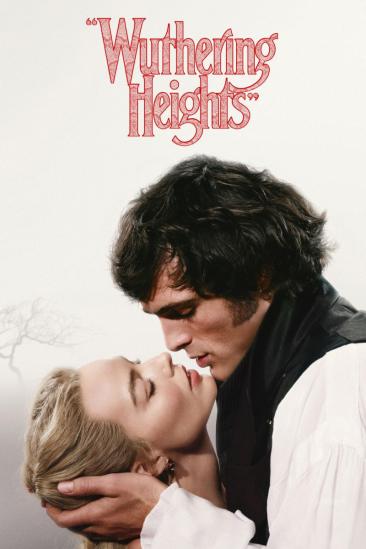
We’ve seen plenty of varying book-to-film adaptations soar or crash. ; good movies that make for bad book adaptations, bad movies out of good book adaptations, and sometimes, very rarely, you get the best of both worlds….or the worst. Given how much I researched regarding the recent adaptation of “Wuthering Heights”, if I had to pick which lane this veers toward….
….I don’t even know if I can even classify it as measly bad, misguided or incurious. To me, this is just straight-up rage-bait.
Through either an astonishing lack of care or foresight, I’m in a pure state of bewilderment to properly describe Emerald Fennell’s direction. Her fascination with kitsch delirium feels more potent and heightened here than it was in Saltburn and there’s a very inauthentic, deliberate self-consciousness to how much she leans on imbalance to amplify every scene in the name of shock value. She’s constantly made a habit of wanting to have her cake and eat it ever since Promising Young Woman and the amount of winking rug-pulls I witnessed here proves she’s yet to move away from that.
Let me get this out of the way right now: yes, Susie Davies’s production design is visually decadent and was to his over but the dependency on symbolic artifice makes it very ramshackle. Shooting this in Yorkshire does briefly help with the engrossment at first; the elegant, windswept landscapes creating a visually rich backdrop for the characters' volatile relationship. It arguably tells the story much more clearly than the script does and it makes sense given that the time period lays the groundwork for a world in which violence and passion commingle in the mud but unless you’ve actually been to the Haworth moors and the Parsonage yourself, this will not feel even a tenth as immersive as other adaptations. The intended atmospheric constriction and systematic anchoring of the moors themselves acting as a living reflection of human turmoil has been stripped out, sacrificing a broader scope and scale for, essentially, a relentless fashion shoot.
Even if you inevitably get on the films wavelength and look at it the way Emerald wants you to look at it, the presentation reeks of an artificial music video with a deliberately dressy, Alice In Wonderland dollhouse aesthetic. Admittedly, it is easy on the eyes right up until it isn’t but it’s that very contrast between exaggeration and intimacy underneath the surface that widens the films already narrow focus; its Baz Luhrmann levels of exhausting and there’s probably no better example of that than with the cinematography. Sumptuous and grotesquely stylized in such a manner meant to create a sensory overload that's undeniably bold, Linus Sandgren does succeed in that regard: the 35mm VistaVision style does, artificially, capture the oppressive, unwelcoming dourness of these locations with dramatic lighting and striking color coding, although tying many of its visual references to fucking GONE WITH THE WIND is a special kind of ick that I will not shut up about.
Editing-wise, I don’t have much to harp on regrading Victoria Boydell’s work. For every stylized transition that compensates for an abrupt shift in momentum and energy, the rest is plainly par of the course.
The pacing became fucking laborious and emotionally draining after the first fifteen minutes especially with the elongated runtime of 139 minutes, Jacqueline Durran further complicates the look of the film with how egregiously anachronistic and unbalanced her costume design ends up being to the point where placing them within the context of Brontë’s language immediately makes them look plastic and toyetic (yes, I’m aware other period pieces like Marie Antoinette or Romeo or Juliet follow a familiar wavelength but they at least stayed consistent with it), visual effects came off underwhelming and abysmal for a film operating on a $80 million budget and do not get me started on the tone. I’m being mindful to not immediately classify it as sheer, unabashed, pant-dropping, butthole brandishing sadomasochism but it’s difficult not to take that bait when everything here is so contrarian, random and, well, tone-deaf.
Just like the lopsided production design, Anthony Willis’s musical score, and more specifically Charli XCX’s unbelievably on-the-nose soundtrack couldn’t be anymore sparse or off-putting. Mixing the classical with modern pop-techno fervor boasts of a unrelenting aim for "prestige-meets-TikTok-era cool” vibes even when they support the dull stretches and it gets distracting really fast. At least the sound design and auditory cues fulfill the intended purpose of audibly enveloping the listener, tension here either relies almost exclusively on shock value or is uniformly non-existent (the very diffusing of any events that should have it circumvent the need to wrestle with any real cognitive dissonance) and I don’t even know how to approach this MMPA rating; one of the tamest R-rated films I think I’ve seen recently, not in terms of graphic imagery but the lack of a desire to go all the way with it.
God, I’m so torn over the acting; for every intense presence bolstered by heightened commitment, the rest are either strained or theatrical in the worst way between awkward banal dialogue and line deliveries you’d hear at a dress rehearsal and dismal characterization; since every character is thinned out and condensed down to one or two separate quirks, all the performances are pushed to the brink of pantomime even if the arcs they get in the context of this are earned. Not since “love stories” like Fifty Shades of Grey and 365 Days have I had to contend with characters this dumb, this toxic, this immature to this degree; begrudgingly, it is meant to be purely by design.
Both Alison Oliver and Hong Chau fit naturally into their unconventional roles, Martin Clunes and Ewan Mitchell are adequate for what’s required of their parts and while, yes, Margot Robbie and Jacob Eloridi make the best with what they’re given and some sparks do fly with their passable chemistry, they both take a lot getting used to. I’m convinced the only reason either Eloridi and Robbie were casted in this was because Emerald Fennell has a crush on Jacob (she has admitted to that) and Robbie was the only one she could find that resembled a self-insert so she could live out her fantasy through her; you cannot convince me otherwise.
If I must applaud this story on the basis of establishing a mood than a traditional narrative bedrock, its how daring Emerald was for even making the attempt, declaring immediately from the start that she’s gonna march to the beat of her own drum. Amputating and only the first half of the novel—a common practice for most Wuthering Heights adaptations (and it’s a very VERY loose adaptation at that), it does make sense, from the outside looking in, to try streamlining something already viewed as chaotic and confrontational, especially when this movie is yet another instance of rich, entitled people being impulsive and oblivious while comfortably benefiting from the class systems that protect them. One would argue this is even more confrontational but there’s just one teensy weensy but ever so crucial little tiny detail you need to take into consideration: previous adaptations of this story didn’t feel this hollow or empty.
What we get is a turgid, sometimes deplorable, sometimes boring, very repetitive slog of mentally ill people sexing their way through multiple property disputes and that’s already putting way too much passion and sex into a book that has VERY LITTLE of that. Fluctuating between a bad botox commercial and one of my bad charter school plays, it trades introspection for spectacle, flattening a layered narrative into something that feels anti-intellectual; it feels openly contradictory as a romance, terribly anticlimactic as a tragedy and the intended eroticism comes off like cheap lust—awkward, half-committed provocation than any real sensuality or actual heat. Even Bridgerton managed to get that right and this is coming from someone who’s actually read some erotica in the past. The only thing this narrative gets even remotely right is the basic blueprint of how people forming a trauma bond around each other doesn’t make for the best relationship and how tortured souls will weaponize their unhappiness, possessive tendencies and destructive codependency in a bid to gain some emotional stability or control over others and even that is from the excessive overuse of taking a blunt tool to a complex work.
Emerald spends the entire near two and a half hour runtime jamming this square peg into a round hole and barely gets any mileage out of it aside from an admittedly clever opening shot that immediately turns everything overcomplicated and oversimplified at once. The original source material juggles all different kinds of abuse: romance, systemic racism, classism, violence, trauma, domestic abuse, societal isolation, consequences of repression and colonial anxiety and rather than using Cathy and Heathcliff to forcibly carry out the events here to enforce said themes, they’re turned into victims of Shakespearean circumstance amongst a sea of watered-down, surface level contradictions that siphon out much of the novel’s nested complexity for wandering around in circles, telling you one thing and showing you something else. I can’t buy into the dumb romance or the class divide or any of the other tragically f’d up stuff it wants to crib from the novel if you’re not gonna treat it with the proper gravitas it’s meant to be presented in. It insists so highly upon itself, yet it can’t even commit to its own twisted raciness that the marketing made us believe.
There’s no reason to even call this one of “the greatest love stories of all time" unless it’s a case like Romeo and Juliet, where the source material doesn’t romanticize them but interrogates why we do and call it perverse…..and I can so very nearly say this film does something similar…..if not for the generational structure being gone, the anger being sanded down, and the politics stripped away. And that’s on top of Nelly and Linton being recasted as Vietnamese and Pakistani and then turning them into controlling or jealous antagonists (it does get Nelly right as the chief unreliable narrator at least), completely removing Hindley and Lockwood while turning Cathy’s father into Heathcliff’s abuser, turning Isabella into a sycophantic nymph who enjoys her abuse, the portrayal of the poor as sexual deviants and the rich as clueless prudes, nobody being the proper age to properly sell the endless drain of young people dragging everyone else down by stupid, ill-timed decisions and do I need to mention Heathcliff being white-washed AGAIN?
I swear this film keeps getting more racist by the minute.
And then the movie deliberately cuts off before it gets to the actual tragic part of the original story? For the love of g—too many adaptations already stop before this part anyway. Only the 1992 iteration bothers to tell the whole story and that’s important because that middle and last section of the book is the most vital to showcasing that generational cycle of abuse and how determined Heathcliff is to sacrifice the happiness of everyone around him to make himself feel better while having the ghost of Catherine continuously haunt him (yes really). All of that vicious, heinous subtext and Emerald basically turned it into a wannabe porno without any of the payoff.
Judging this purely as a standalone movie, it’s just annoyingly plaguy and boring. Putting it side-by-side with the book, it’s everything I just said but locked into such perverse complacency that it shouldn’t even be a question why this feels morally questionable.
A tediously banal recounting of a wet dream that completely disregards and bastardizes the original substance of the story and then doesn’t even have the backbone to fully commit to its own erotic delirium or confident vision, this iteration of “Wuthering Heights” sets out to do so little with so much and achieves even less than the bare minimum…..and for what? What was this all for?