I know I shouldn’t be furrowing my brow and squinting my eyebrows at the prospect of watching a made-for-TV movie; multiple times in the past have I mentioned my efficiency for going in as unbiased as I can for movies I plan to review but when you come across titles this generic with a broad synopsis masking any dormant potential the project can unleash before you even press play, something smells fishy and I can’t blame certain people for turning away.
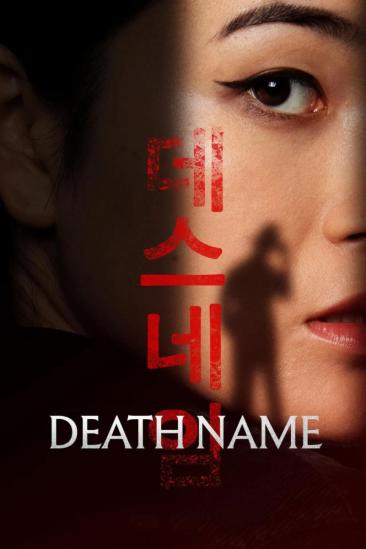
Thankfully, “Death Name” proves there’s something more to its stature beyond empty platitudes.
The general gist upon dissecting Réi Talas as a director to me is how unbeholden he is to the concept of one directorial methodology. He tries to juggle the more classical traditional style against an experimental backdrop with the lens of an auteur; it showcases a lot of confidence in his part as he threads this line between awkward intimacy and minimalist urbanity…..even if he leans a little too much towards the latter. Not bad for the debutant.
For it being a made-for-TV production, the scope and scale downscaled to be drastically small if not moderately medium-sized was to be expected but much of the production design constructed to feel spacious, omnipresent and condensed in equal measure felt like a weird disconnect from the format. Maybe this is just me expecting the film to explore its set-pieces and environments more dynamically to better lean into the cultural aspects of the story. I hoped for richer interactions with the spaces created, something that would transcend the confines typically associated with smaller productions and be more immersive but outside of four thematically fitting set-pieces, the rest either were just routinely rudimentary or felt at odds with the narrative (specifically the very beginning that showcases some weird, ahistoric writing that doesn’t really tie into what the film does later).
But then again, I supposed distance is the name of the game here; this is a very circular presentation that wants everything to loop back on itself and be given an intricate link despite a faltering atmosphere. That doesn’t mean every technical element is aptly working against it, though; take Greg Hudgins for example. His camerawork has a decent balance of steady cam, hand-held, and alternating middle to wide angles to give off the appearance and aesthetic of a major big-budget production on top of so-so lighting, decent color composition and clever interplay of light and shadows that infuses the quieter scenes with an appropriately eerie feel.
Imran Shaikh’s fast editing only gets distracting going into the third act; half the time I couldn’t tell if it was the video buffing or him. Thankfully, most of his editing a cohesive rhythm that kept me mostly enthralled from beginning to end.
There’s a clear sense of control and consistency over the pacing; neither dragging its heels or strapping a rocket to blow past everything, its patient enough to give everything its due time with an 81-minute runtime that actually accommodates that without sacrificing a coherent flow. Visual and makeup effects alternate between being enticing and more conventional, the overall focus, I think, is intended to feel ambiguous as its neither tight nor loose enough to be considered and the tone is mostly predominant in how indistinct it is with the structure presented; cheesy one moment and serious the next without one overtaking the other, its weirdly cozy with its composure.
If you listen to Neil Lee Griffin and Amanda Delores Patricia Jones's combined musical score on the first listen, it fits right in with the standard horror fare we've come to expect from horror these days, but dig deeper and you'll discover layers of nuance between discordant piano keys that punctuate moments of strain, haunting string arrangements and the composers' bold commitment to incorporating traditional Korean instrumentation; the soundtrack transcends mere background noise to NEARLY become a character in its own right. The sound design is more cleverly implemented than I originally gave it credit for, many of the scares alternate between merely acceptable, theoretically effective or disappointing that speaks to a rather superficial approach to the tension, said tension isn’t artificial but neither is it wholly organic with the certain liberties it has to take and honestly, what we got here feels like the bare minimum of an R-rating; just enough blood, just enough cursing, just enough graphic imagery within the confines of the limited budget.
Would I call the overall vibe of the cast rocky? Hard to say but it’s nice to see how comfortable the cast is around each other, even if their performances vary heavily from the younger cast to the supposed older, experienced veterans. All of their dialogue is passable and while everyone infuses their archetypal characters with enough pomp and gusto, they’re not immune to the typical brain-dead decision making these movies require…..and only two of them are remotely interesting and remain as such at the end of the day. Amy Keum holds the fort as the perpetual lead with an observant, stubborn tenacity that she makes likable without turning it flashy and Kevin Woo, despite his character also being underwritten, tries his best with his portrayal.
Right off the bat, this movie got into my good graces early on by doing something I adored with Exhuma: jettisoning actual traditional scares in favor of digging into actual Korean history, deeply rooting the realities of the past not just to educate the audience but also create a compelling backdrop that adds emotional weight to the characters’ struggles without pulling the focus away from the current generation. For a story that actually does prioritize narrative clarity, the short runtime might actually feel like a detriment towards its attempt to be entertaining and informative but Regina Kim structures the narrative to work its way around enough of the limitations to where its restraint cushions the more thinly veiled components, giving the usual Korean horror movie tropes a longer lifeline. Scenes don’t wander, conversations end when they’ve made their point, a lot of care was put into selling the curse and the ramifications it set in stone for the family despite being strangely subdued and I like how they didn’t bother acting around how duplicitous Jun already was as soon as he showed up.
It’s a very light, very straightforward story that keeps you locked on a linear but gnomic pathway that, at least, buoys its own predictability to ensure it satisfies how much or how little curiosity you might have.
As someone who’s always wanted to, and is still in the process of digging through my ancestry to get the full picture of my bloodline and long line of descendants, I always find myself invested in the fusion of old and new Korean beliefs and culture more inthralling than I care to admit. Here, whether it be details about the gwishin, the family genealogy books called Chokbo, or once again, digging back through the trenches of Japan’s colonial history with Korea, more abject focus is placed on those who still feel the lingering effects of said turmoil into the present day. It’s both informative and depressing in how it shows identity, assimilation and the lengths certain immigrants will go to either leave their heritage behind or find comfort in it, consequences be damned. Some run from their past, while others still have fond memories and those who lack cultural awareness like Sophie are routinely stuck in the middle; again, that very distance should drive the search for belonging, pondering the multifaceted nature of self-discovery where traditional customs clash with modern realities and how much the emotional weight of that history often sheds light on the diverse paths individuals take in navigating their cultural landscapes. And to the movie’s credit, it knows not to rush any of that.
However, keep in mind: even as someone who still lacks the necessary knowledge to fully take in and appreciate many of the Korean cultural and spiritualistic aspects it discusses, Exhuma was structured in such a way to reward your curiosity even if you couldn’t grasp ahold of the socio-political allegory….while still being unpredictable enough to capture your interests. That film had more meat on its bones than this one; this movie makes it to where me and the audience are practically two steps ahead of Sophie before the sternly choreographed sequence of events carry her to the next revelation or inevitable scare; it’s thankfully never tedious to the point of nausea but its not something you can actively overlook due to how predictable everything is. It’s one of those movies that plays its cards both too safe and too close to its chest; upon understanding its limitations and working within and around them, the movie effectively blocks itself off from expanding its horizons.
For a TV-only film, it’s conceptually stronger than the execution otherwise would have you believe and yet, it never truly carries itself like it has brilliance to unsheathe tucked within the film's fabric.
Far from a discouraging watch, but if I had to pick between this and Exhuma for a more exceedingly thorough dissection of identity and allegorical metaphorical layering, I’d happily take the latter.