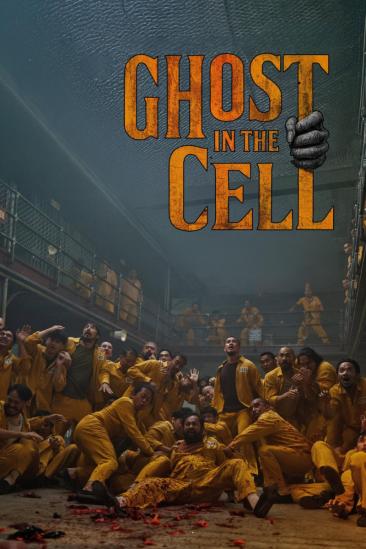
In a notorious prison, an invisible force begins killing inmates brutally, compelling enemy gangs and corrupt guards to work together as they try to survive the mounting bloodshed.
Safe to say, I’m most certainly getting my fill of Eastern society content, and then some. I’m still buzzing and glowing from The Furious film me and Grandma watched months ago, and even before then, I’d fallen down a rabbit hole of Thai drama shows that I can’t climb out of, so it’s safe to say my watchlist is going to keep growing faster than I can clear it. Which is exactly why I stumbled across this movie “Ghost In The Cell”, an Indonesian film, by complete accident — I was actually looking for something else with a vaguely similar kind of vibe, and the thumbnail caught my eye…
…and bloody hell, what a riot.
One thing became abundantly clear to me within minutes of watching this: Joko Anwar doesn’t direct so much as conduct chaos. He might as well be an unorthodox circus ringmaster. Less polished but more unpredictable, his direction has four separate pulses: loose-limbered swagger, manic ricocheting, outright ridiculous, or often fusing all three into something gloriously unhinged. And beneath it all runs this live wire of white-hot rage, a raw, pulpy energy that feels less like filmmaking and more like controlled detonation.
Tightly staged and equally flexible in such a confined, cramped setting, it took no time at all for me to fall in love with Dennis Sutanto’s production design... and most of that boils down to how well its strengths and limitations remain central to the film’s satire while balancing each other out. From the dirtied walls to the stained floors to the tiny cells, the space feels lived in; the prison’s own incarceration infrastructure feels deliberately sliced into this separation of the classes divide, if only faintly, treating each set as this compressed version of reality where punishment falls the hardest on the powerless, and every block is painted in just enough misery to give the limited set enough attention to detail to what is essentially an exaggerated version of Indonesian society.
Collision happens to be the name of the game for this film’s presentation, so much so it reminds me of one particular piece from Peter Halley called Collision Circuit—a day-glo acrylic composition that uses geometric conduits to symbolize social space, circuits, and human containment in a manner that feels immediate, and emotionally charged. Just like that work, this one shuffles between levity and a calculated unevenness, this brash refusal to coast that permeates every waking frame and every other technical element involved here; Ical Tanjung’s cinematography is interested both in cartoonish slickness as much as maintaining a queasy, off-kilter mood to where the camerawork actively becomes a mini-extension of both the institution…and sometimes the ghost. Many of the bizarre camera angles, and pause-and-reset dolly shot compositions are animated enough to feel claustrophobic without feeling invasive and vice versa, on top of utilizing solid lighting, and an emphatic use of primary colors (a sturdy fixation on the color yellow) to where it's never visually flat.
Go figure, Joko also does the editing here; it’s probably the most normal thing about this entire production, yet still vibrates with the same chaotic energy as the rest. Like a blender set to purée, it never lags behind the insanity.
Despite how tight the settings are, the actual pacing meant to sustain everything is anything but….and that’s not exactly a detriment. The speed, the volatility, even the jarring transitions where a heavy moment is split open with impromptu slapstick or tonal whiplash clicks together clashes heavily with the movie’s runtime being spread thin, refusing any logical tempo with its own centrifugal force. Most of the practical/digital mix of visual effects hit that sweet spot of realistic and vaguely cartoonish without tripping into the uncanny valley; some of the humor (whether it be the slapstick, the black comedy or the intentionally awkward dance choreography) is a hit or miss; for how much the movie keeps throwing at you to gesture at more developed trappings and undertones, the emotional stakes are pretty limiting, and the kills themselves are extremely well done; very graphic, very gnarly, and the way it was being artsy and imaginative with the gore? Oy vey.
The tone was about what I expected and somehow more with how many genres it stuffs together: one part prison thriller, one part supernatural horror, one part murder mystery, one part action comedy, one part political cartoon….and all parts gleefully macabre. Each one punctures the horror and somehow veers away from cynical nihilism without wearing out its welcome, essentially turning what could’ve been shock value into porous boundaries that takes some getting used to….but once you do, it’s more digestible.
Aghi Narottama’s musical composition is this odd cacophony that sticks to the expected staples of the genre but also widely veers away from it, juxtaposing with the brutal nature of what happens to…confusing results; combining that with the original songs from Tony Merle does inject the soundscape with one hell of a personality, even if they can occasionally be overbearing and overtake the score. Much of the sound design from Peter Bawiee starts off fairly basic only going on a gradual incline the more the films progresses, Monika Paska’s costume design is simplistic but effective, highlighting the power dynamics and social hierarchy of prisoners, guards, higher ranking officers and the warden to contrast the plainness, and do I need to say more about the MPAA rating? It’s a clear R-rating if I’ve ever seen it.
It most definitely helps that all the performers are game to play along with the heightened register Anwar is working in. They play the absurdity straight enough for some of the comedy to land, but not so straight that the satire becomes lifeless. However, despite this essentially being an ensemble picture, very few of the performances actually stand out on their own. Stuck to the brim with oddball dialogue that frequently ventures quickly into on-the-nose, it’s nothing too grating that you can’t listen to it, and while some characters are more heightened than others and the rest are more sketches than actually developed people needing to work their way out of a terrifying scenario, there’s enough commitment to the insanity that, frankly, you’re just happy to roll with it.
The closest I can think of to an actual memorable performance is Abimana Aryasatya, the only one who best capitalizes on and fulfills the directors predilections on blending multiple genres, and gives him a grounded moral center as someone constantly forced to fight but is desperate to stop.
At its core, this narrative is as follows: a mild-mannered journalist, Dimas is framed for the murder of his boss, ending up behind bars, where he meets inmates that begrudgingly watch his back. However, his arrival also sees a vengeful ghost follow him inside the joint and massacre the inhabitants inside with no idea who’s the actual target—or if there even is one. For a film premise as blunt and erratic as this—think Shawshank Redemption, and Hellraiser had a baby—the narrative is equal parts about finding some semblance of peace and resilience. The first thirty to forty minutes are dedicated to setting up the harsh conditions of the prison system, rounding us up with our foray of characters and different groups and laying the groundwork for the rules set in place; what happens after that is things scorching forward on two tracks plotwise: the supernatural acting as a vehicle for ghastly retribution from beyond, and second, the escalating satirical bloodbath once it’s clear that nobody’s in control. Every narrative choice is dictated by very, VERY loose threads of connective tissue that does get off to the races eventually but often results in what feels like lengthy loading screens, and it’s not afraid to tip its hand with how simple and straightforward it ends up being. Half of its plot points are either pulled from old genre chestnuts or so transparently telegraphed that any seasoned horror-comedy viewer could write the beats from memory, but the true joy in all this comes from the barrage of invention and rhythm.
Somehow, it ends up being a feel-good story that simultaneously isn't feel good in even the residual sense. There’s elasticity in that that shouldn’t be as breezy as it ends up being, but that’s just a testament to how flexible the structure ended up being.
Satire is where the story feels like placing most of its eggs in a particular basket and I can, at least, applaud this for how politically alert it tries to be tying that into how powerful fear is. Fear robs us of reason; in pursuit of absolution, we commit horrible atrocities and call them acts of self-presentation….except it’s more than just what fear can cause you to do. It’s how exposes family secrets, class violence, moral hypocrisy and the failures of institutions. Yes, none of this is subtle or clever or anything we haven’t already seen before but these are universal issues that you don’t need to be in Indonesia to understand (we’re living through that shit down here in the U.S) and it’s made twice as relatable due to nearly every character in this movie being on the receiving end of some type of trauma or social injustice done to them by government forces. Working best when it leans fully into this metaphor, the prison, and in essence, the moral rot of the narrative becomes a pressure cooker in which resentment, corruption, impunity, hierarchy and absurdity all become visible. Every locked door, corrupt official and privileged inmate contributes to a larger picture of a system that is not merely broken, but selectively broken.
There’s a bitter irony to how society’s way of facing a problem exacerbates it—and how ignorance and quick solutions seem to make us accept the issue, even though danger is still present.
All that being said, there are some visible rough patches. I understand having a formula to stick to and there is a point to the repetitive nature to it but when you really dig into the meat and potatoes of what’s supposed to make this story tick, it all feels slightly disconnected and detached enough to where you don’t feel as attached as you should. Besides, most of said commentary is gestural at the end of the day and only takes the form of the blunt dialogue; sure, the prison itself makes for a nice visual reference to give it some backbone, but I often have to wrap my head around whether or not they were talking what they preached or just puffing their chests for the sake of it. Other parts of the story are heavily contrived, like how the group identifies the way in which the killer ghost selects his targets or just one of the guards randomly deciding to switch sides without much buildup. And this is just one of the few ways the movie’s pieces can take a surprisingly long time to fit together, even when the setups and payoffs are nakedly visible from miles away.
For how often it surprises you, makes you laugh or jolts you awake with its malarkey, there’s something lethargic fluttering in the background threatening to derail everything despite that handprint not actively hovering over it.
Guess you can’t go wrong choosing to put this on. But just temper your expectations just a tiny bit so you know what you’re getting into.