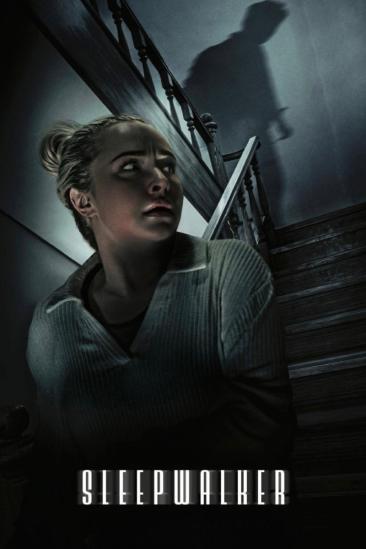
A grieving mother is haunted by the tragic loss of her daughter in a car accident that left her abusive husband in a coma. As she battles a surreal descent into darkness, her sleepwalking episodes...
Another in the frustratingly long line of people the Grim Reaper keeps taking that isn’t who we want him to take, Hayden Panettiere’s sudden passing has….frustrated me. As someone who enjoyed her in Scream and is catching up with her work on Heroes and beyond, it’s infuriating that now she will be added to the eternal list of child actors whose lives were cut short by drug addiction, sexual assault, parental neglect, and the never-ending rabbit hole of sleaze and corruption that has plagued the industry for generations. Putting aside my tin-foil hat assumptions that she was really unalived rather than overdosed, the loss still sits heavy in a way that feels increasingly familiar.
Her final film, “Sleepwalker”, bleeds into that familiarity in a way that does make the experience appropriately haunting….but the feeling never lasts.
Brandon Auman, I promise I’m not actively going out of my way to be mean here….but it is staggering how sauceless and artificial this direction feels. This was based on a short film he did back in 2024, and whatever sincerity Brandon captured there gets lost in translation here, completely sanded clean of raw texture. It actually brings to mind Bryce McGuire’s Night Swim dilemma— both filmmakers created compelling shorts that got studio attention, only to watch their concepts stretch painfully thin at feature length, and the strain to make it work at full-length becomes apparent. What comes out the other end is tired, hollow, exhausted and, above all, empty.
Production designer Sean Hoschek and art director AJ Cardoza attempt to stretch their limited resources across an expansive vision of Rhode Island’s decaying domestic spaces, with mixed results. There’s a Lifetime Channel-esque modesty to how these spaces are dressed and worn, carving out a few pockets of specificity amongst the pervasive, grimy atmosphere of domestic unease, but that ambition ultimately buckles under the constraints, leaving much of the film feeling like it occupies the same few redressed rooms. Even if crowding you in domestic surrealism was meant to be the point—even pointing out the nice details in brooding canvases and creative clutter that externalize Sarah’s mental fracture—the scope and scale of the story keeps putting said locations at odds with one another and the ever-changing nature of what we think is happening.
You know that famous bag of tricks idiom bears no weight to it if the bag only ever holds one trick. That’s the thing that immediately takes me off balance with this presentation: the film repeats its tricks relentlessly, cycling through the same rotation with the confidence of a magician who hasn’t noticed the audience has already seen behind the curtain. The more the structure relies on repetition, the more everything here settles strictly for less, especially when none of the other technical elements here actually stand out. Marcus Friedlander’s cinematography is perhaps the outlier here, it being the only one actively trying to look and feel something vaguely cinematic. For every basic drone shot, unflattering composition, muted color palette, and the lit-for-TV visual aesthetic made specifically for the small screen, the movement itself feels just voyeuristic and curious enough to feel like its gliding around something it shouldn’t be. There’s a persistent sense of presence to its stark, moody contrast look and how it shapes
I suppose Tucker Marolf’s editing isn’t too remarkable enough to leave a remark about. It does its job.
Let’s put this into perspective: the short film clocked in at 7 minutes. Padding that out to 88 minutes to hit the magic number that sells to cable programmers and streaming services was always going to be a disaster without an actual plan—and the pacing here proves how quickly that decision caught up with itself. There is a tempo to it early on that almost suggests intention, but it quickly dissipates before it settles on any consistent rhythm or momentum. Visual effects aren’t deplorable enough to stand out in a negative light, but they’re still second-rate, any potential there was for gradual stakes to matter are trounced by the film’s refusal to tighten its tension or suspense, and every single jump scare in this is absolutely pathetic, and I do mean EVERY SINGLE ONE. They all start and end more or less exactly the same way (or at least some derivative of an event that leads to the same outcome). Credit where it’s due: the tone fits. There’s a genuine bleakness to the whole affair, a gray, suffocating emotional flatness that might have read as intentional atmosphere if it didn’t so reliably curdle into darkness-induced audience apathy. There’s only so much oppressive misery you can dip into before a disconnect is found, and it just makes you stop caring.
Conventional is the first word that comes to mind when describing Sebastian Evans’ musical score, not only leaning very heavily on stock “eerie shock” cues but the droning strings and sudden brass stabs you’ve heard recycled across a hundred of these things, only assembled rather than composed. It doesn’t raise beyond achieving the bare minimum: fulfills exactly what the scene requires it to convey, then evaporates from my memory the second the scene ends. The sound design, to its credit, earns its keep a little more honestly, not much of Olivia Leigh’s costume design stands out aside from the occasional color psychology with some of the wardrobe, and I’m not quite sure if this is an acceptable R rating—it’s earned more through the occasional explicit profanities and unsettling domestic situation, not so much through gore or spectacle; what little we do get is perfunctory or arrives too late.
I want to applaud this cast so badly; everybody is acutely aware of what emotional register the story demands, and they try to adapt accordingly—leaning into the grief, the dread, the obscene, the quiet domestic horror with a commitment that frankly outpaces everything the script and direction are giving them to work with. Now, that’s not to say most of the performances are good—some are more robotic than others—but they are doing the work of a better film than the one they are actually in. Sucks though that they’re stuck with dialogue that suffers from “stating-the-obvious” syndrome and is almost nothing but drably forced exposition and characters that are either razor-thin or about as effective as Scatman Crothers’ role in The Shining.
Veterans Lori Tan Chinn and Beverly D’Angelo add welcome levity through quirky deliveries or dry, sly humor in every eye-roll, and they’re the only legitimate saving graces of this cast. Mischa Barton is stuck with a character that flip-flops so sporadically that her acting suffers from trying to keep up with her own whiplash; Justin Chatwin comes off more as a one-note bully, both of the kids are fairly adequate with what they’re given (which isn’t much) and Hayden Panettiere herself? I dunno; you can tell she’s harboring a physical commitment to the role to where’s not mundanely trudging through the motions, but her energy often feeling mismatched with her surroundings means there’s rarely an honesty to her portrayal for a character that’s supposed to feel absolutely everything.
Yeah, you can tell this narrative is one you’d expect to see released in the January dumping grounds. It has all the hallmarks, constant clichés and tropey staples you’d expect to see in a premise being stretched out way too thin. Scenes that should feel impactful instead pass by too quickly or lack the proper buildup needed, the emotional throughline feels fractured from the outset, and having to elongate these isolated ideas long past their breaking point for the sake of artificially increasing the timer makes it difficult to stay fully invested in what it tries to sell you. And don’t tell me there’s more to it than that because again, the movie goes out of its way to be repetitive all the way to the end: the same jump scares, the same “Am I dreaming?” refrain, the same visual of Panettiere’s hand sprouting extra fingers, the same revelation that she’s been harming her own family while sleepwalking, the same confrontation with a shadowy figure that dissipates into nothing. It becomes grueling trying to pretend these images aren’t just merely wallpaper pasted up again and again until all the mystique curdles into irritation.
Really, this doesn’t have much of an identity to set itself apart from other staples of this particular genre, and it doesn’t even do that especially well. And that’s not even going into the sloppily delivered twist regarding the sleepwalking, the dreams, basically why the events of the film are even happening in the first place.
There were chances here to really mold night terrors, PTSD, domestic abuse, parental grief, and survivor’s guilt—all fairly commonplace themes by the way—into something liberating, especially with how all of those individual factors tied into Hayden’s life growing up, the trauma she endured, and how much changed for her after she became a mother herself. Even the very condition of sleepwalking itself, which can be very dangerous under specific circumstances in real life, held an actual conversation to be told but is heavily restricted and only employed under the most rudimental or simplistic of uses. Sure, they’re the most effective that way and they tie into the supernatural guise the story is centered around but c’mon, the “is this a dream or reality” gimmick couldn’t been used more effectively; like how Holden relates more with the grandma character because she's the only one willing to listen to and relate to his specific dreams while Hayden’s character actively tries to push them down, citing both her disbelief in the supernatural and her burgeoning desire to just move on, or even going all the way with the Buddhist concepts of Upādāna or Bhava, how spirits that cling to life often do so due to unresolved attachments or unfinished business from their past lives, and how that attachment to the cycle of birth and death binds us to suffering and hinders our growth. I mean, they do offer lip service to that, but it’s the bare fucking minimum, and they’re all delivered with the enthusiasm of someone who’s heard them described at a party but never actually sat with them.
Look, I don’t want to be ignorant here. I get exactly what Brandon is trying to do: treat memory as an antagonistic force, trauma as an invasive presence that washes over everything and grief as a strong enough active condition that it can reorganize, distort and reconfigure everything we think has happened. But all that potential is being daisy-chained to movie logic that’s very shaky (and not in such a way where they can smartly play with or around the notion of said logic) and actively gets its kicks by leaning into the annoying misdirection. It gets exhausting really fast and considering we’re dealing with a literal domestic abuse storyline here, that’s problematic in and of itself.
Speaking of….let's talk about that ending. It took me a few minutes to come to grips with it, not so much because it arrives with an exhausted whimper that lands with the hollow thud of inevitability rather than earned catharsis, but because once you recontextualize everything and put all the pieces together, it feels like the movie is actively going out of its way to torture Sarah. And the fucked-up thing is you wouldn’t think that at first; the film deliberately presents Sarah’s point of view as the reference to her fractious relationships with everyone around her for a reason. But everything is so poorly put together in a disingenuous manner that it extends almost beyond just mishandling the reality of surviving domestic abuse or being faced with the power to pull the plug on one’s abuser. It’s as if the very medium itself conspired to replicate eerily similar patterns of exploitation and dismissal that defined too much of Hayden’s actual life. And when you add on that sloppy twist I mentioned earlier AND being cheap with the constant dreams within dreams within dreams trick being shoved down our throats, it cheapens any slight attempts at character development her character could’ve actually gone through. I appreciate the attempt at a more gray lining to what otherwise would’ve been a simple black-and-white construct, but it comes too late to fully shift the paradigm and, again, misses the true trauma of those who have undergone domestic abuse.
Regardless of quality, Hayden Panettiere’s final movie deserved much better than this. But the fact this paint-by-numbers, generic ass, conventional, run-of-the-mill, branflake, tired attempt at horror trivializes domestic abuse while being the most dispiriting through its lack of imagination aggravates me more than what “Sleepwalker” probably intended.